
Add us as your preferred source on Google to see more of our content in Search.
 Add to Preferred Sources
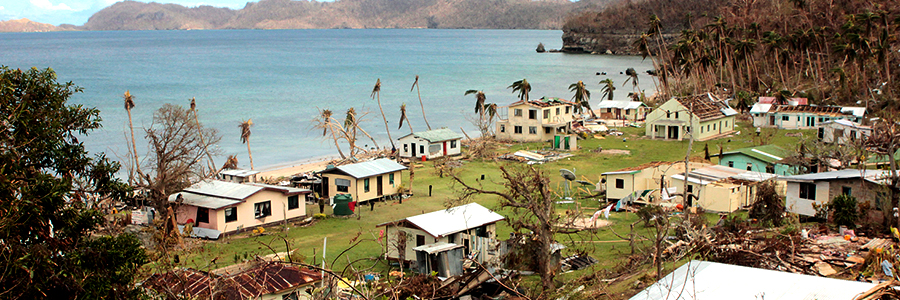
In 2016, Cyclone Pam tore through the island nation of Vanuatu with wind speeds of more than 280km/h (175 mph). Eleven people died, 96 percent of crops in the country were decimated, and 65,000 people lost their homes. It was the most severe and expensive disaster in Vanuatu’s history.
As a result of the destruction, the country’s communication lines and channels collapsed and only one cellular tower remained operational. The outer islands of Vanuatu were completely cut from the national emergency team coordinating the response.
Post-disaster assessments and reflections on how to improve disaster response after Cyclone Pam found ineffective coordination and lack of emergency management capacity in the country’s provincial and remote areas. In response to these findings, the Vanuatu Government and National Disaster Management Office (NDMO) prioritized a decentralization of emergency management to ensure remote and provincial areas had access to critical disaster communications and coordination before, during, and after the disaster.
Part of this work was the construction of six Provincial Emergency Operations Centres (PEOCs) in provinces across the country. The final three centers in Penama, Malampa, and Sanma were officially commissioned and opened by the Prime Minister of Vanuatu in July 2018.
Each center is built to category 5 cyclone standards, equipped with innovative technology to ensure communication lines remain open during disaster and can double as evacuation centers for local communities during times of crisis.
Vanuatu Prime Minister Hon. Mr Charlot Salwai Tabimasmas said at the opening “Our number one priority during a disaster is to ensure everyone is safe. These centers will significantly improve communication lines between the national and provincial officers and assist our decision-makers to determine how to best respond to emergencies”.
The decentralization of the national emergency management gives all communities equal access to emergency centers and enables disaster officers to effectively implement disaster plans across their respective province. The PEOCs also bring together officers from the Ministry of Climate Change, Meteorological station and Environment, which are interlinking fields that work cohesively to achieve better resilience outcomes for Vanuatu.
These centers will also support the development of provincial and community-led disaster plans and will be used as educational hubs to increase understanding of how best to prepare for and respond to disasters in the future.
To achieve this significant work the Vanuatu Government partnered with the Pacific Community (SPC) to manage the final three buildings in Panama, Malampa, and Sanma. SPC’s Building Safety and Resilience in the Pacific (BSRP) Project funded by the European Union and ACP Group of States invested the €760,000.00 for the establishment of three PEOCs. This included provided for clearing of the land, construction, procurement of ICT equipment, installation and the engineering oversight for construction. The centers are as also equipped with kitchen and toilet facilities to ensure they can operate as evacuation centers if needed.
The SPC Director-General Colin Tukuitonga, highlighted the project as an example of Pacific nations determination in the face of climate change saying, “For our Pacific islands, it is not a matter of ‘If’ disaster will strike but about ‘when’ it will strike. Extreme weather variability brought on by climate change has increased the frequency and ferocity of tropical cyclones in the Pacific. Vanuatu like other Pacific island countries is working to improve the national disaster management process, and SPC will continue to support this as a priority”.
The establishment of these three PEOCs now provides a network of six across the country, with the first two provincial centers built and funded by the World Bank linking to the National Disaster Management Office in Port Vila. The Pacific Community (SPC) ensured consistency in design by using these original PEOC designs to ensure all centers were built to the same high standards.
The six newly built Provincial Emergency Centres (PEOCs) across the country will help Vanuatu to better prepare and disseminate critical information quickly in times of disaster. The 2018 – 2019 cyclone season starts in November.
Other BSRP support in Vanuatu
This work is in addition to the several other activities to strengthen national disaster coordination as part of the BSRP project by SPC. The project also provided the NDMO with three disaster vehicles and three boats to be distributed throughout key provinces to assist officers in traveling to isolated communities. The Project also purchased drill rigs, which are used to tap into boreholes in communities that did not have access to water. To increase the countries emergency service capacity, the project, through the Pacific Island Emergency Alliance activity, formalized a twinning partnership between Australia Capital Territory (ACT) services and Vanuatu Fire Service with the aim to increase Vanuatu’s fire service capacity.
Together with the Vanuatu government, the BSRP Project is changing the operational process of the nation. The key activities implemented under the BSRP Project have improved the operational process of the countries disaster processes. To ensure these activities operate long after the project closes, the NDMO will be adopting and monitoring the operations of these activities.
Original source: SPC
Published on 18 July 2018