
Global Disability Summit sparks 170 commitments to tackle stigma and discrimination against people with disabilities
Add us as your preferred source on Google to see more of our content in Search.
 Add to Preferred Sources
The UK Government’s first-ever Global Disability Summit has yielded ambitious commitments from a host of governments and other organisations to tackle discrimination and stigma against people with disabilities.
This comes after Penny Mordaunt, International Development Secretary, called on other governments and donors before the summit to follow the UK’s lead and “stand alongside people with disabilities in their country, commit to ending stigma, and fully value the contribution they can make to the success of their nations”.
Among the most significant pledges made were commitments to pass transformative new laws to protect the rights of people with disabilities, as well as assurances to help those affected by humanitarian crises. There were also commitments to help people with disabilities to access vital technology and work with the private sector around the world to reduce their prices.
- Nine national governments have committed to passing or formulating new or revised laws to give people with disabilities greater rights in the countries in which they live;
- 18 governments and other organisations have committed to new action plans on disability inclusion;
- 33 governments and other organisations have pledged to specifically support more people with disabilities affected by humanitarian crises – this includes the Australian government who will give $16.4m to support disability inclusive action in response to the Syria crisis;
- Nine organisations and governments, including USAID, The World Health Organisation, and UNICEF, have, along with the UK, joined the Global Partnership on assistive technology, aimed at transforming access to, and the affordability of, life-changing devices and basic technology, like wheelchairs and glasses.
Seven UN agencies attended the Summit, and they committed to change the way they include people with disabilities into their work
And crucially, nine African governments have committed to creating safety nets to ensure that people with disabilities are not forgotten about in their societies. 19 governments, businesses and other organisations have also pledged to develop the skills of people with disabilities and help them access decent work.
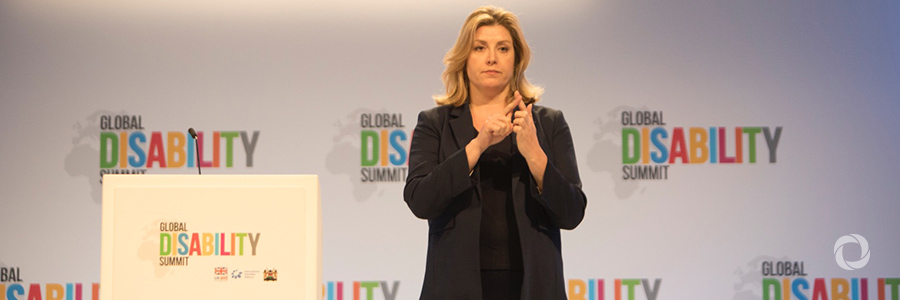
“It is fantastic to see such ambitious commitments made from countries and organisations from around the world at today’s Global Disability Summit. But, if we are going to help people with disabilities to fulfill their true potential, today cannot just be about words – it has to be about action. That’s why we need to hold ourselves and our partners to account and make sure these commitments produce genuinely transformative results for people with disabilities worldwide,” said International Development Secretary Penny Mordaunt.
Original source: DFID
Published on 24 July 2018