
Add us as your preferred source on Google to see more of our content in Search.
 Add to Preferred Sources
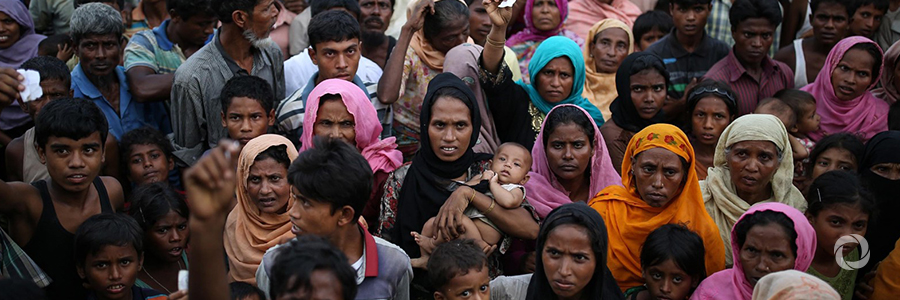
Thousands of people caught up in Bangladesh’s Rohingya refugee crisis are at risk of human trafficking, IOM, the UN Migration Agency, counter-trafficking experts have warned, stressing that the scourge of exploitation can only be tackled if authorities, local and international agencies, and communities work together.
The call for a multi-actor approach to prevent more refugees and members of the host community in Cox’s Bazar, Bangladesh, from falling victim to traffickers, came after government officials, military and police representatives, and IOM trafficking experts, joined a rally and public meeting in the town to mark World Day Against Human Trafficking.
Seventy-eight victims of trafficking have been identified and supported by IOM in Cox’s Bazar in the past ten months. Due to the complex and clandestine nature of the crime, it is recognised that this figure accounts for just a fraction of the true number of men, women and children trafficked during that period.
“The horrific prospect that thousands of people affected by the Rohingya crisis will end up in the hands of traffickers is a risk that must not be underestimated,” said Manuel Marques Pereira, IOM’s Emergency Coordinator in Cox’s Bazar.
OM is the lead agency coordinating the fight against human trafficking in Cox’s Bazar. It launched its programme in September 2017, just weeks after hundreds of thousands of Rohingya refugees fled across the border to escape violence in Myanmar.
The influx brought the total number of Rohingya in the area to almost one million, prompting a massive humanitarian response to meet the needs of refugees and local communities, who struggled to deal with the impact of so many desperate people arriving in an area where many already lived in poverty.
“Tackling this relies of a three-pronged approach of protection, prevention, and prosecution. IOM is already working on all three areas in Cox’s Bazar and we will be working closely with the authorities to significantly increase activities over the coming months and in the longer term,” she said.
Among the key counter-trafficking activities currently being conducted or upscaled by IOM’s counter-trafficking team in Cox’s Bazar are:
- Identification and safe referral of victims through a conjoined GBV and counter trafficking programme that works to provide a direct package of assistance to survivors, while working closely with communities and relevant organisations.
- Over 500 awareness sessions and campaigns are being carried out in communities with more to follow. In recognition of the fact most Rohingya do not read or write, three cartoon stories about trafficking based on real-life cases from Cox’s Bazar have been produced to illustrate the dangers and some of the different methods used by traffickers.
- Legal assistance to victims.
- Capacity building on trafficking for over 250 people in the humanitarian community.
- Working with law enforcement officers to help them to safely identify and refer victims.
“Human trafficking is an intolerable form of abuse that the whole of society must work to end. IOM here in Cox’s Bazar is determined to do everything in our power to protect people from traffickers,” said Parmer.
Original source: IOM
Published on 31 July 2018