
Add us as your preferred source on Google to see more of our content in Search.
 Add to Preferred Sources
Istanbul has increasingly become a destination city for migrants and refugees from countries such as Syria, Iran, Afghanistan, Iraq, and Somalia. According to the latest available figures from the Turkish Directorate General of Migration Management (DGMM), these nationalities make up a majority of the over 500,000 registered foreign nationals in Istanbul and the 3,9 million registered nationwide. Many migrants and refugees from these countries are vulnerable and in need of assistance.
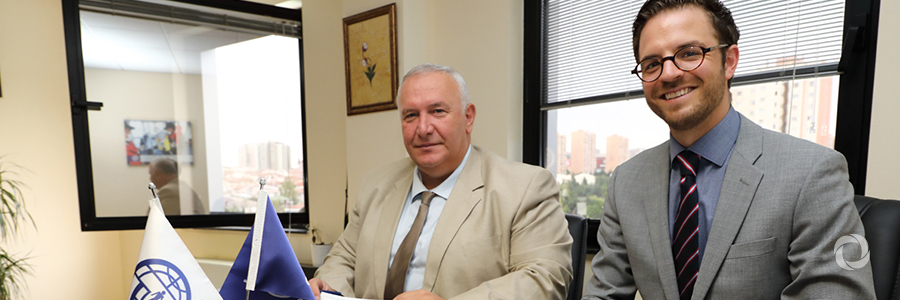
Over the next year, with support from the Swiss Secretariat for Migration, IOM, the UN Migration Agency, will expand its Migrant Presence Monitoring (MPM) Programme to include Istanbul province. MPM is an important tool developed by IOM to support DGMM and the humanitarian community track migratory flows in Turkey to better manage migration and address issues of integration, registration and service provision of and for migrants and refugees.
“It is crucial to better understand the challenges faced by refugees and migrants, as well as by the host communities, to enable better policy decisions and improve humanitarian response,” said Tiziano Balmelli, Chargé d’Affaires a.i. of the Swiss Embassy in Ankara. “With its expansion, MPM will be able to cover 80 percent of the areas in Turkey where vulnerable migrants and refugees reside. The Swiss Government values the contributions of IOM’s MPM programme, the only comprehensive programme of its kind in Turkey,” added Balmelli.
IOM Turkey has implemented MPM since May 2016 to monitor the movement and intentions of migrants and refugees around the country. With this one-year grant from the Swiss, the addition of Istanbul will bring the total number of provinces where MPM operates to 26.
“We are filling a crucial need for migration data that gives us insight into migrants and refugees on the move in Turkey,” said Lado Gvilava, IOM’s Chief of Mission in Turkey. “Without it, we would not be able to help provide basic needs and improve their quality of life,” said Gvilava.
Original source: IOM
Published on 8 August 2018