
Add us as your preferred source on Google to see more of our content in Search.
 Add to Preferred Sources
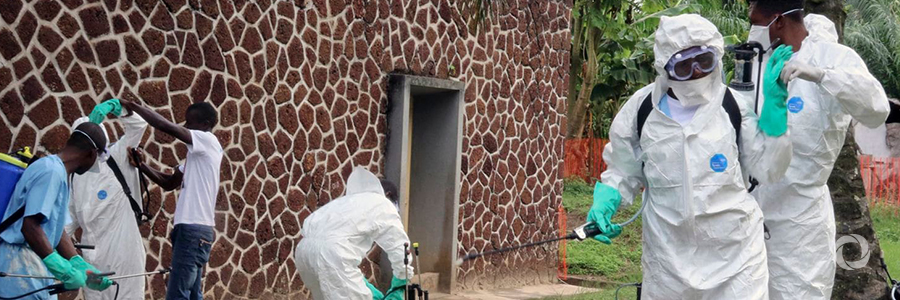
On 31 July, new cases of Ebola were reported in the North Kivu Province of the Democratic Republic of the Congo (DRC), just days after the country’s ninth epidemic was declared over in the Equateur Province. IOM, the UN Migration Agency, is carrying out mobility mapping of the affected area while beginning measures to help contain and end the new Ebola epidemic.
The outbreak in North Kivu is currently centred in the Mangani health area of the Mabalako health zone, which is situated in the Beni territory, adjacent to the Ituri Province in the north and Uganda in the east. The affected area is linked to the surrounding localities by road, an airstrip, and a lake port. Through its airstrip, Beni territory is directly connected to two international airports, Goma and Kisangani, which also connects the territory to the rest of the DRC, including the country’s capital, Kinshasa. There are numerous communities living along the border with Uganda, which suggests strong cross-border ties and movement. All these factors indicate a potential risk for spread of the outbreak.
The North Kivu Province is densely populated with 8 million inhabitants. The Beni territory has a population of 1.5 million people, of whom 800,000 live in the town of Beni. The Mangani health area itself has 30,000 inhabitants, further increasing the risk of the outbreak spreading.
Between 11 May until 07 August, 36 deaths were recorded out of a total of 43 cases. Out of the 36 deaths, nine are confirmed as Ebola and 27 are labeled “probable” as these happened a possible outbreak was raised and need further investigation.
IOM has deployed an epidemiologist to Beni as part of the coordinated response to this latest outbreak.
IOM has started a mobility mapping exercise to track population movements in the area, which borders with Uganda. It also intends to carry out health screening and promote hygiene at key points of entry. IOM has identified 28 points of entry to the affected area that need an immediate implementation of prevention, surveillance and communication activities. IOM will support the Health Ministry to strengthen coordination with neighboring countries at national and community level. In relation to this, IOM hosted a training for 40 Government health staff on health screening, hand washing and risk communication to enhance the effectiveness and the quality of health screening in Goma Airport, Petite Porte and Grande Porte at the border with Rwanda.
In addition to responding to this most recent outbreak, IOM is supporting communities affected by a previous epidemic in Equateur Province. To ensure the outbreak does not recur, IOM is continuing its prevention, surveillance and communication activities in that Province.
Original source: IOM
Published on 10 August 2018