
Add us as your preferred source on Google to see more of our content in Search.
 Add to Preferred Sources
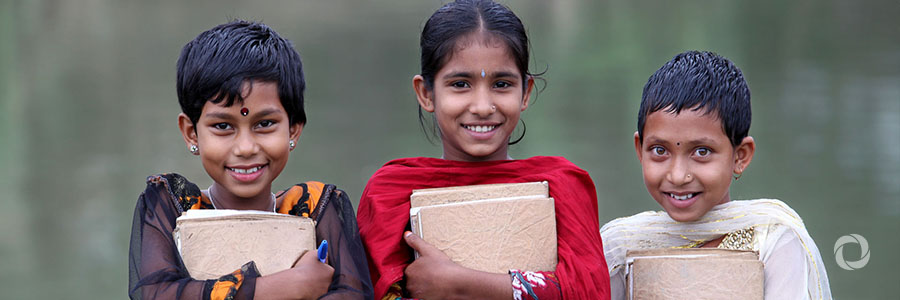
The government of Bangladesh signed a $510 million financing agreement with the World Bank to enhance the quality and effectiveness of secondary education system in the country. This will benefit 13 million students studying in Grades 6-12.
The Transforming Secondary Education for Results (TSER) program will support the government’s ‘Secondary Education Development Program (SEDP).’ It will focus on improving education quality and access, and that students — especially girls and children from low-income households — complete secondary education. For this, the program will support stipends and school grants.
“Bangladesh has made remarkable progress in advancing access to education, and has achieved gender parity in secondary education,” said Rajashree Paralkar, Acting World Bank Country Director for Bangladesh, Bhutan, and Nepal. “Continuing to invest in quality education is critical for Bangladesh to achieve its vision of becoming a middle-income country. For this, the program will support modernization of curriculum and ensure professional development, management, and accountability of teachers.”
The program will provide training to 500,000 school teachers and school principals to enhance quality of secondary education. It will also support learning assessments of students in grade 6, 8 and 10 to identify learning gap and suggest policy actions.
The Global Financing Facility (GFF) will provide a $10 million grant, which is aimed at improving adolescent health and school retention. The program will construct separate toilets for girls. In addition, the program will also support incorporating topics on general health and hygiene in the curriculum.
The agreement was signed by Kazi Shofiqul Azam and Rajashree Paralkar on behalf of the government of Bangladesh and the World Bank, respectively, at the Economic Relations Division.
The credit from the World Bank’s International Development Association, which provides grants or zero-interest loans, has a 38-year term, including a six-year grace period, and a service charge of 0.75 percent.
The World Bank was among the first development partners to support Bangladesh following its independence. Since then, the World Bank has committed nearly $28 billion in grants and interest-free credits to the country. In recent years, Bangladesh has been among the largest recipients of the World Bank’s interest-free credits.
Original source: World Bank
Published on 13 August 2018