
Add us as your preferred source on Google to see more of our content in Search.
 Add to Preferred Sources
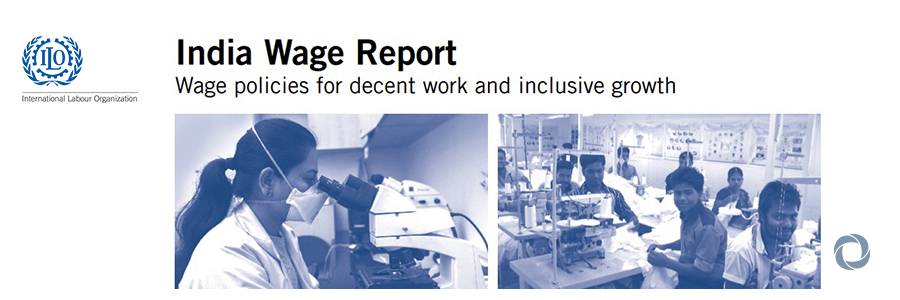
While India’s economy in the past two decades has seen an annual average GDP rate of 7 % — low pay and inequality persist according to the India Wage Report: Wage policies for decent work and inclusive growth, published by the International Labour Organization.
The NSSO estimates also indicate that the real average daily wage has doubled between 1993—94 and 2011—12. Wages have seen a faster growth for the most vulnerable categories including workers in rural areas, informal employment, casual workers, female workers and low-paid occupations. Nevertheless, there remain huge disparities.
As per the Employment and Unemployment Survey (EUS) of National Sample Survey Office (NSSO), in 2011–12, the average wage in India was about 247 rupees (INR) per day, and the average wage of casual workers was an estimated INR 143 per day. Only a limited number of regular/salaried workers, mostly in the urban areas, and the highly-skilled professionals earned higher average wages.
Though India was one of the first countries to introduce minimum wages through the Minimum Wages Act in 1948, there exist challenges in providing a universal wage floor for all workers. The minimum wage system in India is quite complex. The minimum wages are set by state governments for employees in selected ‘scheduled’ employment and this has led to 1709 different rates across the country. As the coverage is not complete these rates are applicable for an estimated of 66 % of wage workers.
The report calls for several recommendations to improve the current minimum wage system. Some of these are – extending legal coverage to all workers in an employment relationship, ensuring full consultation with social partners on minimum wage systems, undertaking regular evidence-based adjustments, progressively consolidating and simplifying minimum wage structures, and taking stronger measures to ensure a more effective application of minimum wage law. It also calls for collection of statistical data on a timely and regular basis.
The report also recommends other complementary actions to comprehensively address how to achieve decent work and inclusive growth. These include fostering accumulation of skills to boost labour productivity and growth for sustainable enterprises, promoting equal pay for work of equal value, formalizing the informal economy and strengthening social protection for workers.
Read and download the report: India Wage Report: Wage policies for decent work and inclusive growth
Original source: ILO
Published on 20 August 2018