
Add us as your preferred source on Google to see more of our content in Search.
 Add to Preferred Sources
As the African Development Bank celebrates World Fashion Day, we take this opportunity to reflect on the potential of the Fashion industry to create value and wealth across the continent, with women and youth at the heart of this change.
We believe that the textile and clothing industry can drive Africa’s industrial transformation and create some of the millions of jobs we need. A stable future depends on the development of labor-intensive sectors like manufacturing, services, and agriculture. Within the manufacturing sector, the Bank knows that job creation “from new activities” such as fashion, design, film and food industries – also known as creative industries – will result in new trade patterns for African countries.
These creative industries are particularly attractive to increasingly interconnected youth eager to explore wider cultural frontiers through social media and the internet. They bring their African culture and creativity as a unique selling point: creative industries bring economic benefits, as well as serve as a vehicle to further African regional integration and identity.
According to UNIDO, in communities across the world, women have protected and nurtured rich cultural value and traditional designs. Investing in developing their skills to generate revenue in these areas leads to greater economic productivity and independence with social and political benefits for their communities. Since women are actively engaged throughout the fashion value chain, we see great potential for economic empowerment in rural areas as well as in urban centers.
In addition to value-added benefits and job creation, we see this particular sector as a great means to foster local content and identity. As Africa embraces industrialization, it must fully engage its human capital and unique craftsmanship. To fully take advantage of the regional and global value chains, each economy needs to enhance its infrastructure, regional integration, policy environment and access to finance.
Demand for African textiles and garments is increasing globally, and African patterns are gaining recognition as truly fashionable and iconic pieces. International fashion houses are integrating more and more African influences in their latest collections.
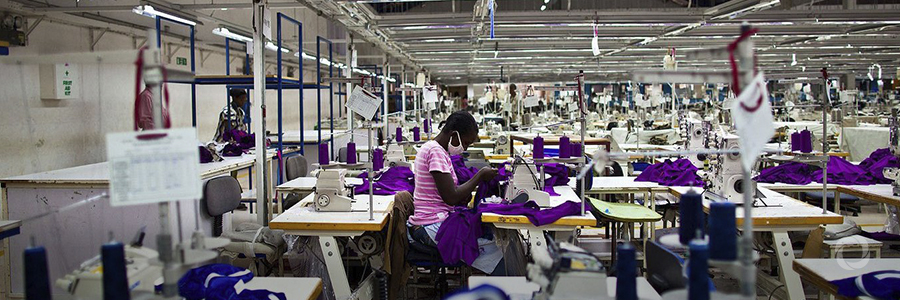
Ethiopia is a great example. With the objective of generating USD 30 billion in export revenue from the textile apparel and accessories (TA&A) sector by 2030, the country is investing in industrial parks to accelerate textile production and the country’s productivity as well as developing a heavy industry that will allow its full industrialization by 2025. According to The Bank’s Fashionomics Africa Report, almost 80% of the workers employed in Ethiopia’s apparel sector are women. In addition to Ethiopia, the garment sector has been growing in South Africa, Mauritius, Madagascar and across North African countries – but much of the rest of the continent has a long way to go.
In this context, the Bank is also rolling out its Fashionomics Africa initiative. Already active in Cote d’Ivoire, Nigeria, Kenya, South Africa and Kenya, Fashionomics Africa is a pan-African program that aims to strengthen the value chain of the fashion sector, by investing in the African textiles, apparel and accessories industry and raising its profile on the international stage. The goal is to connect and strengthen each link in the chain, from producers and suppliers of primary materials to manufacturers and distributors, and of course, investors. With a focus on MSMEs, Fashionomics Africa seeks to foster an environment that creates quality employment and entrepreneurial opportunities, with increased access to finance, startup incubation and acceleration, particularly for women and youth.
The African Development Bank will continue to ramp up its support to the fashion industry so that it can make its full contribution to the growth of our economies, as well as give Africa its rightful place in the global cultural and creative landscape.
Original source: AfDB
Published on 22 August 2018