
Add us as your preferred source on Google to see more of our content in Search.
 Add to Preferred Sources
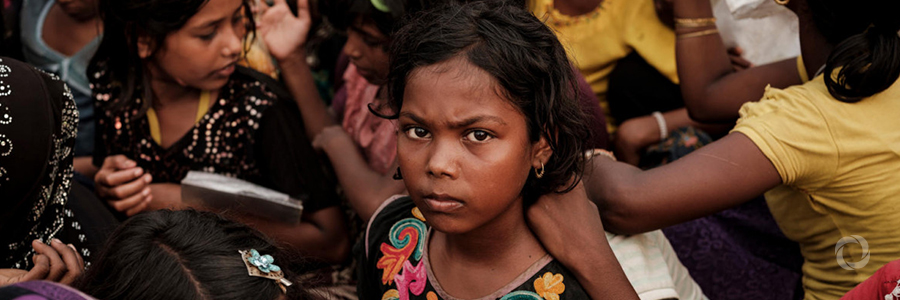
The refugee crisis in Bangladesh sparked by the mass exodus of people from Myanmar almost a year ago risks creating a “lost generation” of Rohingya children who lack the life skills they will need in future, the United Nations Children’s Fund (UNICEF) has warned.
Hundreds of thousands of mainly Muslim Rohingya continue to live in cramped and rudimentary camps in Bangladesh’s Cox’s Bazar, after fleeing a military operation in Myanmar that was subsequently likened to “ethnic cleansing” by the UN’s top human rights official, Zeid Ra’ad al Hussein.
According to UNICEF, the international community needs to do more to prevent some half a million youngsters “falling prey to despair and frustration”.
One key need is better education facilities, which some older children say is almost more important than food, according to Simon Ingram, Senior Communication Advisor for UNICEF.
“Now they are starting to look forward, they’re starting to wonder, ‘What next?’” Mr. Ingram said, citing a child alert issued late August 22. “They are starting to think, you know, what sort of future that they really have, and this is where a new level of anxiety and fear starts to come in.”
Although huge advances have been made in the living conditions of those forced to flee Myanmar, including in disease outbreak prevention, improved water provision and stronger shelters, UNICEF warns that children in Cox’s Bazar face a bleak future.
“If we don’t make the investment in education now, we face the very real danger of seeing a lost generation of Rohingya children,” UNICEF Bangladesh Representative Edouard Beigbeder said in a statement.
“Children who lack the skills they need to deal with their current situation, and who will be incapable of contributing to their society whenever they are able to return to Myanmar.”
Inside Cox’s Bazar, some 1,200 education centres were operational by July this year for around 140,000 children – a significant achievement, given the level of demand.
But there is no agreed curriculum and few learning opportunities for all those above 14 years old, problems that UNICEF is intent on resolving, by providing a higher quality education that focuses on literacy, language, and numeracy, as well as “essential life-skills”.
“It’s about an insurance against a loss of a generation of children to hopelessness and despair -something that we really must avoid at all costs,” Mr. Ingram said.
“We really want to see everybody accepts that this is not a crisis that is going to go away anytime soon and that we have to plan in a more sustainable way for the future, whether that be in terms of providing water and sanitation or health care, or in need of education.”
According to the UN agency report, girls and teenagers are especially at risk of being excluded when it comes to educational opportunities in Cox’s Bazar.
It also calls on the Government of Myanmar to ensure that in Rakhine state – where more than half a million Rohingya remain children from all communities have equal access to quality education.
Original source: UN News
Published on 22 August 2018