
Add us as your preferred source on Google to see more of our content in Search.
 Add to Preferred Sources
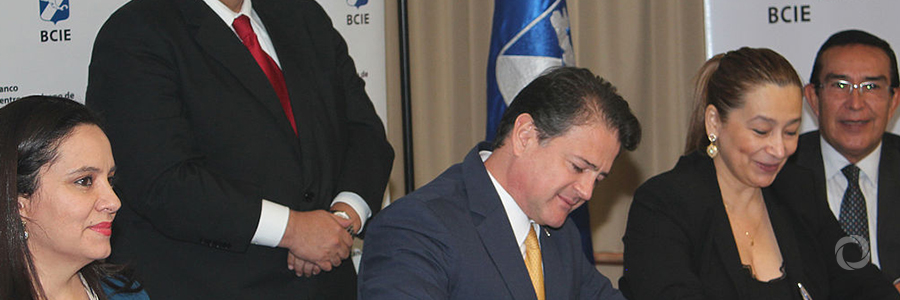
The Central American Bank for Economic Integration (CABEI) made a donation on August 21 of US $1 million to the Government of the Republic of Honduras. The funds from this non-reimbursable grant will be used to support the project entitled “Equipping Critical Areas of the Gabriela Alvarado Primary Hospital in the city of Danlí and the Santa Teresa General Hospital in the city of Comayagua”.
The purpose of this cooperation is to ensure the uninterrupted care of health services, reduce surgical delays, and decrease the neonatal and maternal mortality rates, in line with the country’s priorities through the provision of equipment for the neonatal intensive care and labor and delivery areas of both hospitals.
Also, with this donation, CABEI expects to expand the capacity of the two hospitals by providing medical equipment in critical areas of neonatal care (Labor and Delivery, Neonatal Intensive Care Unit), purchase an ambulance for each hospital, and provide a power plant for the Santa Teresa General Hospital. This includes related services that guarantee training to the personnel responsible for the use of the equipment.
At the signing ceremony, Alejandro Rodríguez, CABEI Executive Vice President, said, “CABEI reiterates its commitment to the Republic of Honduras, with whom it maintains a portfolio of current operations for US $1.065 billion focused on different projects in the areas of productive infrastructure, energy, human and social development”.
“With these resources, we have contributed directly to the development of the country’s road infrastructure through the financing of the primary road network such as the Jícaro Galán-Tegucigalpa highway; the Logistics Corridor; and the Western Corridor, among others,” he stated.
CABEI will continue to focus its interventions on improving the human potential and quality of life of the population, which is why the support is focused on programs and projects that improve access to drinking water and basic sanitation sources, and a greater coverage, efficiency and effectiveness in the provision of health services; such as: the Rural Infrastructure Program (PIR), which has provided access to social infrastructure (water, sanitation and electrification) to poorer rural populations in different parts of the country, benefiting nearly 44,000 people; and the Multisectoral Program, which improved access to drinking water and school meals, among others.
With this development intervention, CABEI continues to support projects that are aligned with its 2015-2019 Institutional Strategy “Integrating Sustainable Development and Competitiveness”, specifically in the Social Development Axis, through the focus area of Human Development and Social Infrastructure.
Original source: BCIE
Published on 21 August 2018