
Add us as your preferred source on Google to see more of our content in Search.
 Add to Preferred Sources
Kenya has one of the most dynamic and innovative economies in sub-Saharan Africa. A decade after going through a food crisis and in the aftermath of the drought in 2016-2017, the country aims to achieve self-sufficiency in food products such as maize, tomato, cabbage, rice, beans, milk and meat. This clearly stated ambition of the Kenyan government has received support from the African Development Bank, which sees food security as a catalyst for the growth and development of the country’s productive sectors.
Today, more than 10 million Kenyans suffer food insecurity, mainly in the arid and semi-arid areas of the north of the country, and most of these people depend on food aid.
But, Kenya has immense areas of arable land with relatively abundant rainfall and a dense river system. Agriculture accounts for more than 35% of GDP and employs over 60% of the country’s active population. To escape the threat of famine or unemployment, though, large numbers of those living in rural areas move to the cities. The response of the African Development Bank has helped to improve life for more than two million Kenyans, especially in rural communities.
Over the last fifteen years, the African Development Bank has supported 10 operations and invested approximately USD 194 million in Kenya. One of these projects is a small-scale horticulture development project with a total cost of 27 million dollars. The Bank supported this project in order to contribute to reducing poverty and improving food security.
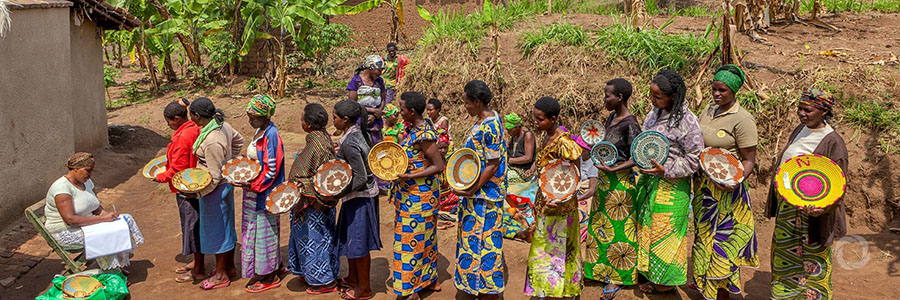
Through this project, 3,173 hectares of land have been irrigated, more than the 2886 hectares originally planned. A total of 100 women’s groups have received training and equipment to process agricultural products. And large numbers of farmers have been mobilized, organized and trained in a range of areas including crop production, livestock, marketing and the management of irrigation systems.
The results have been visible.
Irrigation and infrastructure development has enabled the refurbishment of nine existing irrigation systems for small farmers over an area of more than 2886 hectares and benefited more than 5812 households – 40% of which are headed by women. Eight livestock watering points were built; eight water-consumers’ associations were established and registered, office buildings were constructed in rural areas with water and sanitation facilities and the programme’s access roads were repaired and environmental management was facilitated.
With support to farmers in production and marketing of their produce and financial services support, more than 100 farmers’ groups became engaged in horticultural production and marketing activities. Over 100 women’s groups were helped to successfully conduct various food processing activities and nine storage sheds and market sheds were built. In addition, many farmers received training in the production and marketing of horticultural crops. Farmers were also put in contact with different financial institutions in order to access credit facilities and purchase inputs.
Original source: AfDB
Published on 23 August 2018