
Add us as your preferred source on Google to see more of our content in Search.
 Add to Preferred Sources
In the 2030 Agenda on Sustainable Development adopted in September 2015, the United Nations recognizes that eradicating poverty in all its forms and dimensions, including extreme poverty, is the greatest global challenge and an indispensable requirement for sustainable development.
The Agenda also calls for a spirit of strengthened global solidarity, focused in particular on the needs of the poorest and most vulnerable. It also acknowledges the role of the diverse private sector, ranging from micro-enterprises to cooperatives to multinationals, and that of civil society organizations and philanthropic organizations in the implementation of the new Agenda.
The 17 Sustainable Development Goals (SDGs) set forth in the Agenda can be grouped into six critical areas: people, planet, prosperity, peace, and partnership. They have the potential to transform our lives and our planet by providing the framework needed for philanthropic institutions to enable all people to contribute to the betterment of our world.
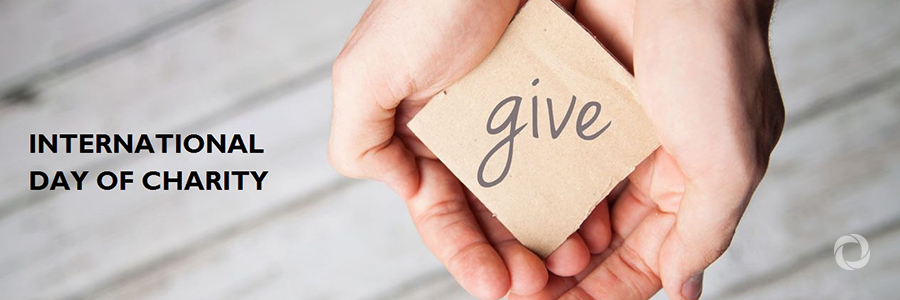
In recognition of the significant role that charities and individuals have undertaken to alleviate human suffering and humanitarian crises, the UN General Assembly has designated in 2012 the 5th of September as the International Day of Charity. This date was chosen as it is the anniversary of the death of Mother Teresa, and the resolution is, in part, a tribute to her work and dedication to charitable causes.
Original source: UN
Published on 5 September 2018