
Add us as your preferred source on Google to see more of our content in Search.
 Add to Preferred Sources
In an unprecedented effort to keep the Carpathian Mountains connected by road and railway lines – while minimizing the impact of transport on wildlife – road constructors, environmentalists and scientists are meeting with ministers at the ‘Sustainable Transportation Planning in the Carpathians’ conference.
The Conference, taking place on September 5 and 6, seeks to find solutions for ensuring the region remains well served by road and rail while avoiding roadkill, the break-up of ecosystems and other harmful effects on nature.
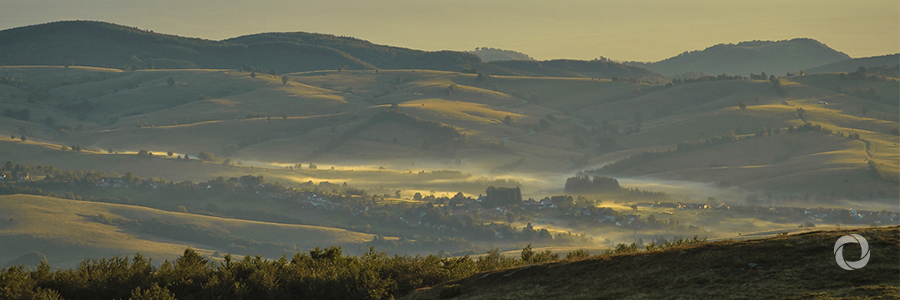
The Carpathians, located in Central and Eastern Europe, host a very rich diversity of fauna and flora, including 41% of Europe’s brown bears and 30% of its grey wolves. Yet roads – which have tripled in length across Europe over the last 30 years – as well as railways, hydropower dams, energy transmission lines, intensive agriculture and forest management now threaten the Carpathians’ fragile mountain ecosystems.
A strategic action plan on transport, which includes measures such as building ‘green bridges’ that respect animal migration routes over motorways and establishing databases to record the location of wildlife, is being considered by a wide range of stakeholders and the governments of the Czech Republic, Hungary, Poland, Romania, Serbia, the Slovak Republic and Ukraine.
The impact of infrastructure projects on ecologically-sensitive areas would be assessed in advance where this is not already the case, while a dialogue would take place with civil society so that their feedback can be taken into account in a project’s design. If adopted, the plan would fulfill part of the Protocol on Sustainable Transport to the Carpathian Convention, which is hosted by UN Environment.
“Sustainable transport represents a major challenge for today’s rural and urban environments, and this is particularly true for the sensitive mountain regions of the Carpathians,” said Mr. Egerer, the Head of UN Environment’s Vienna Office, which hosts the Secretariat of the Carpathian Convention. “As infrastructure development continues to grow, it is important to find adequate solutions that balance conservation with growth and ensure that construction takes place in the most sustainable way possible. The Transport Strategic Action Plan, under development within TRANSGREEN, will help Carpathian Countries go in this direction,” he added.
The EU-funded TRANSGREEN initiative brings together road constructors, environmentalists, experts and decision-makers who can influence and improve the way infrastructure is developed. Today’s meeting involves transport and environment ministers, European Union officials, Carpathian Convention members, national and regional agencies, public service providers, NGOs, universities and research institutions, as well as natural resource managers such as farmers, hunters, and foresters.
“We are now, in a way, writing the history of the way we look at transport,” said Mrs. Hildegard Meyer, manager of the regional TRANSGREEN project, which hosts today’s conference. “We strongly believe in the need for modern and well-distributed roads and railway in the Carpathians. Yet to be truly modern means having a holistic picture on transport infrastructure planning and making sure it takes the impact on wildlife into account. To this end, we need good technicians for solutions based on nature conservation. In this respect, this meeting is truly ground-breaking,” she underlined.
Original source: UN Environment
Published on 5 September 2018