
Add us as your preferred source on Google to see more of our content in Search.
 Add to Preferred Sources
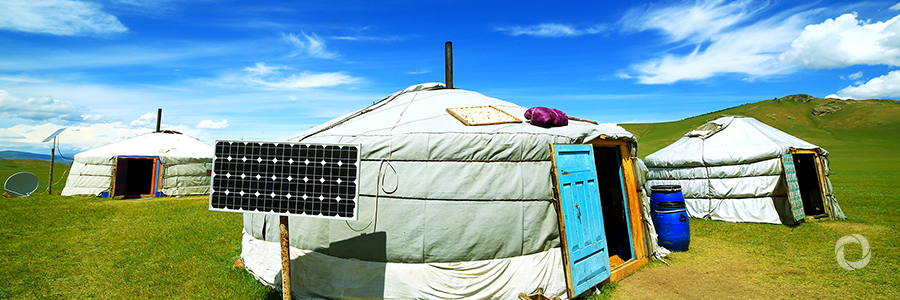
Off-grid renewable energy has witnessed spectacular growth over the last decade. Since 2008 capacity has trebled and the number of people in rural communities served by the technology has witnessed six-fold growth. Today, up to 133 million people are receiving life-changing access to low-cost, secure renewable energy and benefit from the socioeconomic impact access delivers. Global off-grid investments in 2017 reached USD 284 million.
These findings feature in a new IRENA brief launched during the UN High-Level Political Forum in New York. The paper, entitled: Off-grid Renewable Energy Solutions, Global and Regional Status and Trends, builds on IRENA’s statistical analysis to offer a global picture of the sector’s trajectory and impact. The data highlights the extent to which off-grid renewables are emerging as a mainstream solution to the expansion of electricity services all over the world, contributing to sustainable development goal 7 (SDG 7) by broadening the reach of electricity beyond existing grid infrastructure.
“Off-grid renewable energy is an important contributor to energy access across the developing world having witnessed widespread, rapid growth in deployment over the last few years,” said Dr. Rabia Ferroukhi, Deputy Director of the Knowledge, Policy, and Finance at IRENA. “Our analysis captures this momentum whilst shedding light on the need to step up efforts towards 2030 Sustainable Development Goals.”
Off-grid renewable energy solutions are being deployed to provide electricity services for a wide range of end-uses, including for powering agriculture, telecommunication infrastructure, healthcare centres, schools, and rural enterprises. The paper emphasises that linking delivery of off-grid solutions to energy service delivery can unlock substantial socio-economic benefits, contributing to multiple SDGs.
While dramatic cost reductions have been the primary driver of this acceleration, it is the multifaceted socioeconomic benefits that provide the greatest incentives for its deployment. Renewable energy’s centrality to the SDG 7 goal on universal access to clean, reliable and affordable energy against a backdrop of a billion people who still live without it, is unquestionable. However, beyond energy itself renewables are a key contributor to sustainable development, generating jobs, stimulating growth, ensuring resource security and improving health.
The paper notes that in Bangladesh, around 133 000 jobs have been created through a Solar Home System programme and an off-grid renewables initiative in Rwanda aims to generate 7 000 jobs whilst delivering energy access to almost 80 000 people. Similarly, incomes in rural households benefit from lower cost solar lanterns, and remote health and educational facilities are enhanced through the consistent availability of power.
“Renewables are a central pillar of SDG 7 and represent one of the most effective and economic means available in the pursuit of universal energy access,” said Rabia Ferroukhi, Deputy-Director of Knowledge Policy and Finance at IRENA. “Yet beyond this, we are now beginning to truly understand the way in which distributed renewable electricity is transforming the lives of those receiving from it, bringing stability and opportunity to millions of people around the world.”
Read and download the brief on the IRENA_Off-grid_RE_Solutions_2018.
Original source: IRENA
Published on 14 September 2018