
Add us as your preferred source on Google to see more of our content in Search.
 Add to Preferred Sources
Successful implementation of the 2030 Sustainable Development Agenda will require broad-based partnerships with the private sector, which includes the hundreds of millions of family farmers who produce much of the world’s food and often operate with few business incentives, FAO Director-General José Graziano da Silva said.
“Unleashing the potential of private sector investments in agriculture represents today one of the most effective ways to reduce hunger and poverty while safeguarding the environment,” he said at a High-Level Meeting held late Monday to launch the United Nations Secretary-General’s strategy for financing the 2030 Agenda.
The Sustainable Development Goals “need to be affordable globally” and, as they will entail trillions of dollars of financial investment, fundamentally represent a “major partnership building endeavor,” Graziano da Silva said.
Progress towards Zero Hunger – the second SDG – has slipped backward in recent years, reflecting new challenges that underscore how the entire SDG agenda must be addressed holistically, which will require all participants to “profoundly revise and adapt our own development cooperation toolkit,” he said.
Helping smallholders
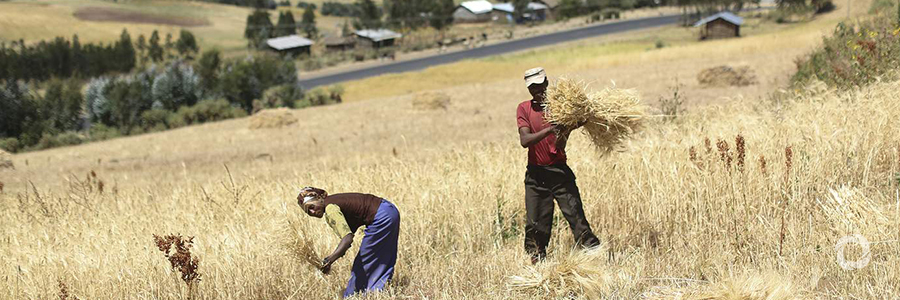
More than 90 percent of the world’s more than 570 million farms are family run, mostly consisting of small-scale activities that – especially in rainfed areas, face high risks and low returns, making private investment harder to attract.
Graziano da Silva called for a “strategy for crowding in private investments” into these farms and related food value chains, along with measures that can reduce the risk and increase the profitability of such enterprises.
The Investment Centre is FAO’s core division dealing with agricultural investment and has leveraged more than $120 billion in projects for member countries over the years. In 2017 it engaged in 55 projects in 35 countries.
“The reality is that funding for FAO’s work is still very limited,” Graziano da Silva said, noting that while the organization has met or exceeded its voluntary resource mobilization target in the past years. Our resource base remains highly concentrated in a few donors.”
FAO is exploring new business models for increased and diverse partnerships, with a focus on South-South and triangular cooperation, domestic resource mobilization and hybrid, public-and-private funding modalities.
Original source: FAO
Published on 24 September 2018