
Intergovernmental Oceanographic Commission (IOC) of UNESCO to work with Indonesia following Sulawesi earthquake and tsunami
Add us as your preferred source on Google to see more of our content in Search.
 Add to Preferred Sources
Since the Indian Ocean Tsunami of 26 December 2004, much progress has been made in establishing IOC-coordinated regional tsunami early warning and mitigation systems in the Indian Ocean, Caribbean and Northeast Atlantic & Mediterranean. The systems complemented the one that had been operational in the Pacific since 1965.
“We continue, however, to face very significant challenges”, said Dr. Vladimir Ryabinin, “and we extend our deepest sympathies to the communities devastated by the tragic earthquake and tsunami in Sulawesi.”
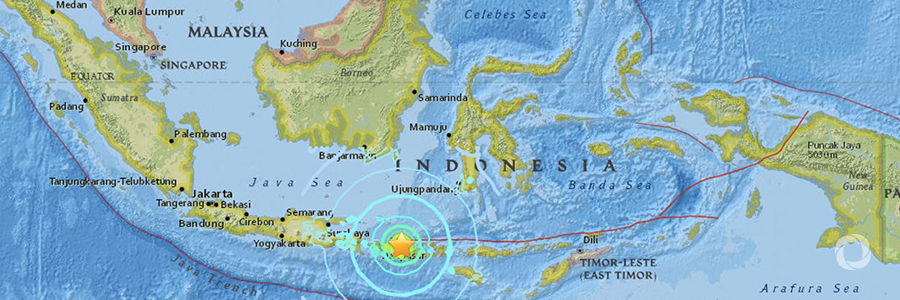
Tsunami waves with a height of the order of 3 meters inundated coastal areas of Sulawesi within 8 – 10 minutes of the earthquake on 28 September 2018. There are some indications that this was a complex tsunami event, as the observed wave heights have not yet been explained. The Indonesian Tsunami Early Warning System (InaTEWS) operated by the Indonesian Agency for Meteorology, Climatology and Geophysics (BMKG) issued an initial tsunami warning for coastal areas of West Donggala and Palu within 5 minutes of the earthquake, in accordance with the standard operational practices.
Every case of tsunami is unique and lessons learned from this disaster will help strengthen the global end-to-end tsunami warning and mitigation system, which IOC coordinates. As one of its first assistance measures, IOC in collaboration with Indonesian authorities will coordinate field studies by an International Tsunami Survey Team (ITST), based on IOC Guidelines for such work.
Dr. Ryabinin also stressed the importance of community preparedness to enable a rapid appropriate response to both official warnings and to the natural signs of a possible tsunami. Such initiatives are critical for saving lives.
Original source: UNESCO
Published on 11 October 2018