
Add us as your preferred source on Google to see more of our content in Search.
 Add to Preferred Sources
In Madagascar, only 15% of the population has access to electricity. In 2017, the country had just 570 MW of mainly thermal (60%) and hydroelectric (40%) installed production capacity. Furthermore, only 60% of this energy is truly available owing to poor maintenance of power plants.
Apart from the fact that these challenges in the energy sector undermine the quality of citizens’ daily lives, they also represent one of the major obstacles to the country’s development and to private sector expansion.
Keenly aware of this challenge, in 2014, the Government of Madagascar decided to embark on intensive reforms to transform the sector. In March 2016, the country was granted $65 million in financial support from the World Bank through the Electricity Sector Operations and Governance Improvement Project (ESOGIP) and in June 2018, $40 million in additional financing.
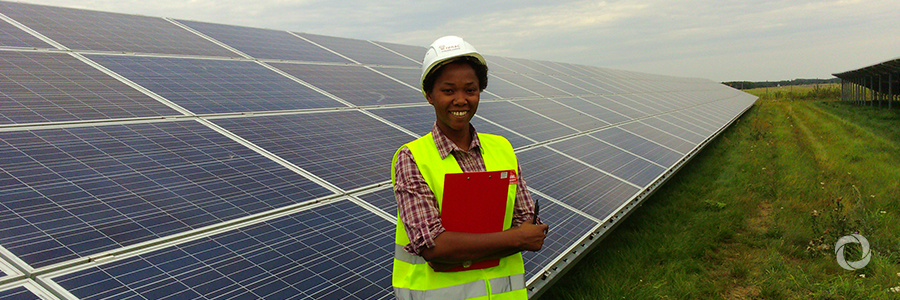
With all regions of Madagascar enjoying over 2,800 hours of sunlight per year, the Grande Île is the perfect location for development of solar power, with a potential capacity of 2,000 kWh/m²/year. The Government is counting on this potential to fulfill its objective of providing energy access to 70% of Malagasy households by 2030.
“Our energy policy for 2015-2030 addresses several pressing economic, social, and environmental challenges. It supports the transition to the energy mix for electricity and lighting, which will include 80% of renewable resources. To achieve our goal of providing electricity to 70% of the population, we will have to produce 7,900 GWh by 2030, as opposed to the 1,500 GWh currently produced,” explains Lantoniaina Rasoloelison, Minister of Energy and Hydrocarbons.
Original source: World Bank
Published on 10 October 2018