
Add us as your preferred source on Google to see more of our content in Search.
 Add to Preferred Sources
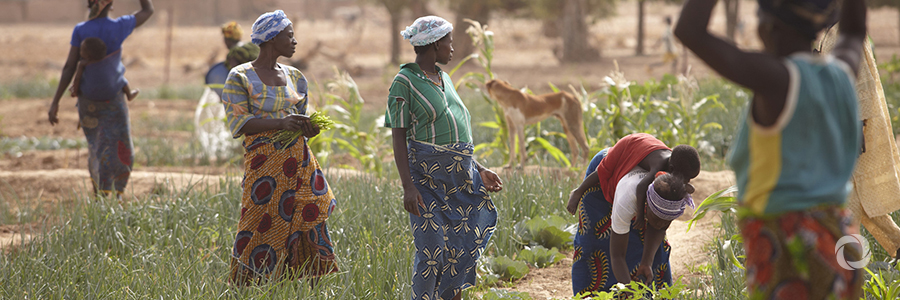
Climate change has long ceased to be an abstract concept to the farmers of Burkina Faso, located in the heart of West Africa. Their crops have come under tremendous strain and the living conditions of the already fragile rural population (92% of the poor live in rural areas) have worsened because of the too infrequent rains or torrential downpours, or as a result of droughts, floods, violent winds or raging fires. In 2017, climate-related events led to a cereal deficit in excess of 400,000 metric tons and caused food insecurity to spike, with children being the first to be impacted.
The ‘Burkin-Naong-Sa Ya’ (which in the Mooré dialect means ‘end of poverty in Burkina Faso’), is a social safety net project started in 2014 with $55 million in funding from the World Bank. It was implemented by the government in the North, Central West, Central East and East regions, where over 60% of poor households are concentrated.
It brings together a mix of interventions in the social sectors of health and education to create an adaptive system designed to improve the effectiveness of public policies on social protection and to build resilience in poor and vulnerable households to climate change and other shocks. It also enables these households to diversify their sources of income. The project will be scaled-up to include the regions of Sahel and then Boucle du Mouhoun.
Over 114,500 fragile households, selected on the basis of the Proxy Means Testing methodology, are currently receiving a quarterly transfer of CFAF 30,000 (around $60) for households with fewer than five children and CFAF 40,000 (around $80) for households with five or more children.
To address poverty in all its dimensions, the project links the award of cash transfers to activities that promote better nutrition, health and education outcomes.
Against this background, raising awareness and monitoring sessions, organized in groups of 20 to 25 members, are targeted to women living in fragile households. Each month, they receive counseling on health, hygiene and nutrition, as well as on the cognitive development of their children. The community facilitators of the project pay regular house visits to monitor progress and check on the proper physical and cognitive development of the children. Finally, they mobilize the village each month to discuss ways to improve the living conditions of all residents.
“Our main objective is to break the intergenerational transmission of poverty through actions that promote the cognitive and affective development of children and better schooling,” notes Gilberte Kedote, World Bank Project Manager
Original source: The World Bank
Published on 15 October 2018