
Add us as your preferred source on Google to see more of our content in Search.
 Add to Preferred Sources
AFD, alongside EIB and KfW, has launched the Clean Oceans Initiative to fight against the scourge of the omnipresence of plastic in the oceans. The aim is to promote projects to clear up, sort and treat this waste before it reaches the sea.
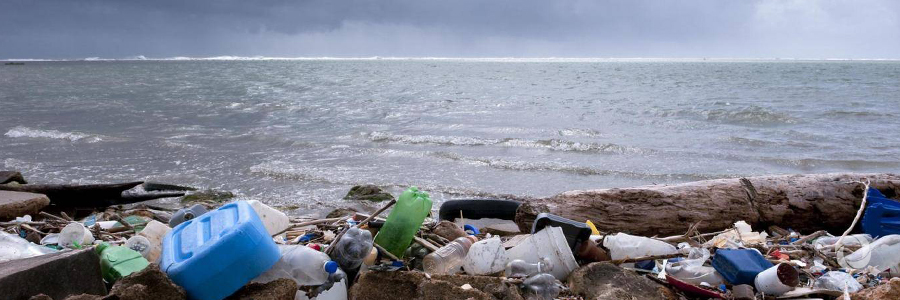
It is a time bomb. It is estimated that every minute, 80 to 120 tons of waste end up in the sea. A large proportion of this waste is plastic. A total of some 8 million tons of plastic and microplastic waste are discharged every year. In the open sea, there is such a massive accumulation in certain areas caused by circular currents that it is referred to as a “7th continent”.
“If we continue on this path, it is estimated that by 2050, the weight of plastic will be heavier than the weight of fish,” said Gilles Kleitz, Director of the “Ecological Transition and Natural Resources” Department at AFD
The presence of these materials at sea has many consequences: animals swallow them or get trapped in them, invasive species cluster around them. They are vehicles of a persistent chemical pollution.
A global challenge
Yet over three billion people rely on marine and coastal biodiversity for their livelihoods. Oceans provide food, but also medicines and energy. They also play an essential role in regulating the climate by absorbing 30% of the carbon dioxide caused by human activities. It is, therefore, crucial to maintain clean, preserved and productive oceans.
As oceans are polluted with plastics from multiple sources of waste, it involves ensuring that the actors concerned – States, local authorities, companies – have the possibility of systematically treating them, one by one. This is what the objective of the Clean Oceans Initiative is all about: assist the partners of KfW, EIB and AFD on the path towards sustainable treatment solutions.
Its objective is to finance projects which aim to:
- Improve the management by waste producers.
- Equip territorial authorities with recovery and treatment facilities.
- Improve waste management in ports in order to contribute to reducing marine waste from ships and waterway transport.
- Support citizen-based mobilization and education actions.
Develop a market for recycling. - Set up wastewater treatment facilities to reduce the discharge of plastics and other pollutants into rivers and oceans.
- The three institutions plan to earmark EUR 2bn for these projects over a 5-year period.
Clean Oceans will specifically focus on the riverside and coastal areas in developing countries in Asia, Africa and the Middle East. Indeed, 90% of plastic waste enters oceans through the ten large waterways located in Africa and Asia, where regular waste collection and controlled waste disposal are often lacking.
Original source: AFD
Published on 15 October 2018