
Add us as your preferred source on Google to see more of our content in Search.
 Add to Preferred Sources
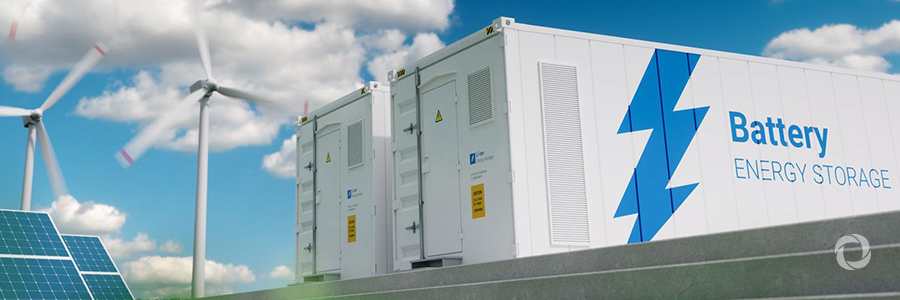
The World Bank Group (WBG) has committed $1 billion for a program to accelerate investments in battery storage for electric power systems in low and middle-income countries. This investment is intended to increase developing countries’ use of wind and solar power, and improve grid reliability, stability, and power quality while reducing carbon emissions.
WBG investments will be made in the following areas:
1) Hybrid solar photo voltaic (PV) + storage plants for reliable electricity supply and diesel/heavy fuel oil displacement shifting part of the energy produced during daylight to evening peak use
2) Grid services to vertically integrated utilities (ancillary services including frequency control, voltage control or black start capability) through stand-alone batteries that can act as power grid assets
3) Mini-grids in low access areas, including small island states
In addition to investments, the WBG will also support the development of policies and regulations required to promote deployment of energy storage and the implementation of procurement practices in favor of economically feasible and environmentally friendly battery technologies.
Why battery storage?
The transition to renewable energy sources in today’s power systems is becoming one of the largest contributions in tackling climate change. The significant increase in the deployment of wind and solar power and other forms of clean energy, however, requires different forms of flexibility to manage the intermittency of these sources. Due to its fast response, ease of deployment and current trends in cost reductions, battery storage is becoming a significant solution to provide this flexibility.
Storage takes many forms – pumped storage, compressed air storage, and thermal storage, among others. The WBG has been supporting pumped storage and thermal storage (in concentrated solar plants) for years. But batteries – while showing great potential – are still expensive, with a small market primarily in developed countries. Where they are needed most is in developing countries, where power grids are weak and cannot take full advantage of their solar and wind potential, or in emerging economies with a rapid increase in energy needs especially during peak hours.
What is the gap?
The current mainstream market for batteries is driven by the electric vehicles industry. Batteries are developed for vehicle application needs and have inherent limitations (e.g. size and weight are limiting factors for vehicles). The existing batteries are not optimized for use in power systems. Most cannot provide long duration storage and many cannot withstand harsh climatic conditions and low operation and maintenance standards. There is a clear need to catalyze a new market for batteries that are suitable for electricity grids through a variety of applications (not just for electric vehicles) and deployable on a large scale in developing countries.
Original source: World Bank
Published on 15 October 2018