
Add us as your preferred source on Google to see more of our content in Search.
 Add to Preferred Sources
The Green Climate Fund today approved RECLIMA, a $127.7 million FAO-designed project that aims to improve the climate resilience of farming systems in El Salvador’s Dry Corridor while benefitting 225,000 people, 20,000 of whom belong to indigenous communities. Women will head around 38 percent of beneficiary households.
The decision, taken by the Green Climate Fund’s Board at its 17-20 October 2018 meeting in Manama, Bahrain, will see some $35.8 million allocated to the project from the Green Climate Fund. The project will also receive $91.8 million from the Salvadoran Government and the Initiative for the Americas Fund (FIAES).
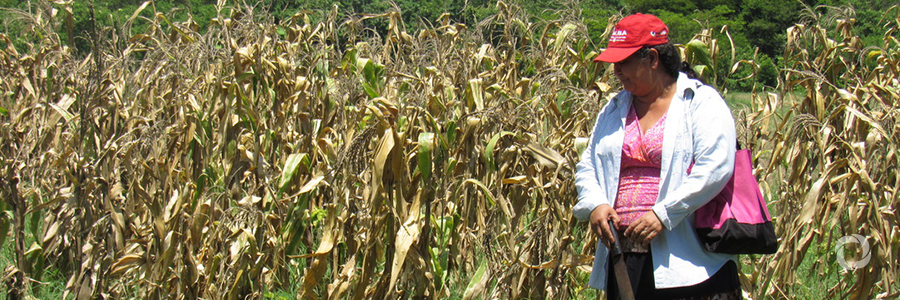
RECLIMA will involve 50,000 family farmers in 114 municipalities – almost 15 percent of all family farmers in the country. The project will work with a third of the population most vulnerable to climate change in El Salvador’s Dry Corridor, an area that suffers severe droughts, floods, and tropical storms.
RECLIMA will also promote a profound change in the food systems of El Salvador’s Dry Corridor to help eradicate hunger, poverty and address the challenges of climate change. This will include an attempt to reduce and/or capture over 4 million tons of carbon over a five-year period.
The project will work with family farmers in order to transform their production practices, improving their basic infrastructure and technical knowledge to build fully sustainable and resilient food systems.
In particular, the project seeks to boost resilience in agricultural production systems covering more than 56,000 hectares, promoting the adoption of adaptation measures such as the use of seeds tolerant to drought.
RECLIMA also seeks to improve agricultural extension systems, promoting a landscape approach to restore ecosystem services through the restoration of 17,000 hectares of degraded ecosystems. In addition, close to 4,000 families stand to benefit from better access to water through the capture, storage, and distribution of rainwater.
With its focus on the Dry Corridor, the project will reduce one of the main causes of international migration originating in the rural areas of El Salvador: climatic shocks such as droughts and floods. As such, RECLIMA will be a key element in the country’s strategy to reduce stress migration.
El Salvador is one of the most vulnerable countries to climate risks in the world. According to the Intergovernmental Panel on Climate Change, the increase in temperatures may reduce the yields of the country’s major crops by 20 percent by 2050, mainly due to drought.
In El Salvador’s Dry Corridor areas, 2.2 million people live in poverty and climate vulnerability, with 54 percent of them depending on the production of basic grains as their main livelihood.
Original source: FAO
Published on 19 October 2018