
EU supports breakthrough wind energy technology in Portugal with EUR 60 million loan granted by the EIB
Add us as your preferred source on Google to see more of our content in Search.
 Add to Preferred Sources
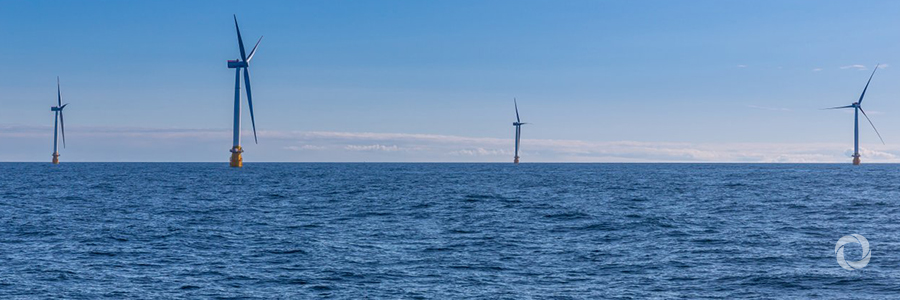
The European Investment Bank (EIB) has granted a EUR 60 million loan to Windplus S.A., a subsidiary of EDP Renováveis (79.4%), Repsol S.A. (19.4%) and Principle Power Inc. (1.2%). The company plans to build and operate a first-of-its-kind offshore floating wind farm, using semisubmersible platforms located off the northern coast of Portugal, 20 km from Viana do Castelo at a depth of 85-100 metres.
Emma Navarro, EIB Vice-President, and João Manso Neto, CEO of EDP Renováveis and Windplus representative, signed the agreement in Lisbon. The EUR 60 million loan will finance the floating wind farm with the support of the InnovFin Energy Demonstration Project facility, which is funded under the EU’s current research and innovation programme Horizon 2020. In addition, the project will receive EUR 29.9 million from the EU’s NER300 programme, and up to EUR 6 million from the Government of Portugal, through the Portuguese Carbon Fund.
At the signing event, EIB Vice-President Emma Navarro said: “We are delighted to support a project that is a milestone for the renewable energy sector. Through this agreement, the EU bank is financing cutting-edge energy technology that will be deployed in Portugal and that will make it possible to install windfarms in locations that were not feasible until this moment, contributing to Europe’s leadership in developing innovative responses to the climate change challenge. This agreement is a good demonstration of the EIB’s commitment to financing innovation and climate action”.
The new installation represents a flagship project in the innovative sector of floating wind energy and will contribute to the development, standardisation and manufacturing improvement of multi-MW modular floating platforms, which is a key objective under the Strategic Energy Technology Plan (SET-Plan) of the European Commission. Two of the platforms will be manufactured in the dockyards of Setúbal, Portugal, and the third in the dockyards of Avilés and Fene, Spain.
It is estimated that nearly 80% of the offshore wind resources are located in waters 60 metres or more deep in the European seas where the cost of fixed-bottom structures is not economically attractive. The development of floating offshore wind technologies will make it possible to take advantage of cost reduction techniques employed in the sector which, combined with the higher capacity factor achieved in deeper water locations, will lead to significant reductions in the levelised cost of energy for floating offshore wind projects.
Original source: EIB
Published on 19 October 2018