
Add us as your preferred source on Google to see more of our content in Search.
 Add to Preferred Sources
A child born in Iraq today will be 40% as productive when she grows up as she could be if she enjoyed complete education and full health, according to the World Bank’s new Human Capital Index (HCI) released October 11 in Bali. Decades of conflict have impacted a range of the country’s human and economic development indicators. Iraq is an early adopter of the World Bank’s Human Capital Project and plans to invest in its people to overcome development deficits with programs such as increasing early childhood development and the expansion of social protection systems.
The Human Capital Project aims to encourage policymakers to invest more in children’s health, education and social protection to boost the incomes of people—and of countries— and build the human capital that is a central driver of sustainable growth and poverty reduction. The HCI is a key element of the Project that allows countries to measure how much income they are foregoing because of human capital gaps, and how much faster they can turn these losses into gains if they act now.
“We want not only to take Iraq’s human capital to where it was before but to take it to higher grounds to enhance our productivity and the future of our country,” said Dr. Maher Johan, Deputy Minister of Planning
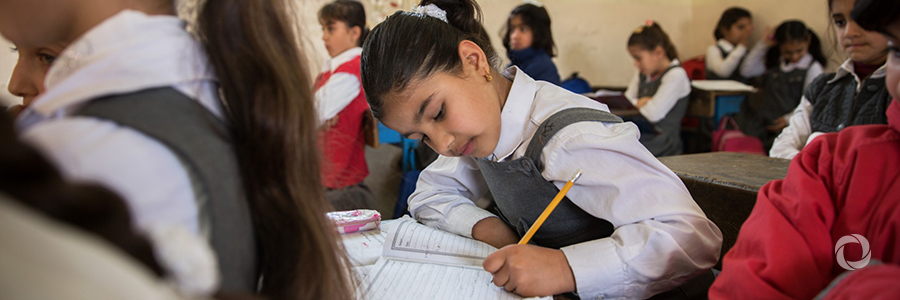
Children in Iraq can expect to complete 6.9 years of pre-primary, primary and secondary school by age 18. However, when years of schooling are adjusted for quality of learning, this is only equivalent to 4 years with a learning gap of 2.9 years.
“Through our partnership with Iraq, we are supporting the development of human capital with an emphasis on health, education and social protection. We will also continue to offer the benefits of our global experience to help Iraq develop the capacity to measure its progress and further refine its policies for investing in people as the source of equitable growth,” said Saroj Kumar Jha, World Bank Mashreq Regional Director.
Original source: The World Bank
Published on 22 October 2018