
Add us as your preferred source on Google to see more of our content in Search.
 Add to Preferred Sources
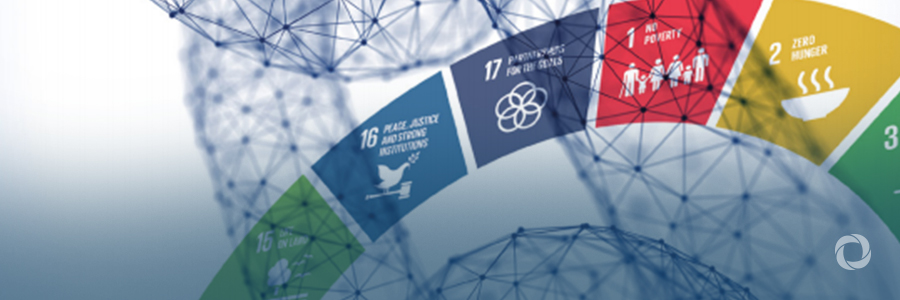
In 2015, all 193 members of the United Nations unanimously passed a resolution implementing a 15-year plan of achieving 17 Sustainable Development, global goals by 2030 (SDGs). Each of these goals has targets to achieve, totaling 169 different targets. The SDGs cover a broad range of social and economic development issues including poverty, hunger, health, education, gender equality, clean water, sanitation, energy, environment, and social justice.
SDG No. 2: Eradication of Hunger
World Food Programme — Building Blocks
UN Aid programs have been wrought with countless cases of fraud, red tape, hefty administrative fees and mismanagement of funds. In order to provide the maximum amount of aid to those who need it the most, the World Food Programme (WFP) implemented a pilot project in 2017 called Building Blocks. It was an early experiment that enabled the transfer of WFP Food and cash on a public Ethereum blockchain through a smartphone app to vulnerable families in Pakistan, addressing SDG Goal №1 and 2- poverty and hunger.
Within months, the WFP expanded the pilot to a Syrian refugee camp in Azraq, Jordan to successfully facilitate cash transfers for over 10,000 Syrian refugees on its blockchain payments platform. According to CCN, the implementation of blockchain technology also enabled Syrian refugees to buy food from local retailers using a biometric scan of their eye where each transaction was recorded on a blockchain, rendering the use of cash, bank cards, and paper vouchers obsolete. In this case, the refugees did not need to share any sensitive data with banks or mobile operators, benefiting from greater security and privacy through an immutable, secure blockchain.
Now, the World Food Programme is currently expanding its Ethereum-based blockchain after saving millions of dollars in bank transfers by utilizing decentralised blockchain technology. Currently, the WFP feeds over 100 million people across 80 countries.
SDG No. 5: Gender Equality and Identity
UN Women: Blockchain Simulation Lab
UN Women is the only UN organ that was founded in the 21st Century. This organ of the UN is dedicated to gender equity and the empowerment of women and was established to accelerate the progress of meeting their needs worldwide. Their focus is on increasing women’s leadership and participation, ending violence against women, engaging women in all aspects of peace and security processes, and making gender equality central to national development planning and budgeting.
From January 29 — February 1, 2018, UN Women hosted a 4-day blockchain simulation lab in order to create launching points of achieving goals like gender equality and ending hunger and poverty. Successful programs from this lab would become part of larger UN initiatives including the UN Women’s Global Flagship Programmes for Disaster Risk Reduction.
The Blockchain simulation lab addressed humanitarian scenarios around identity. For stateless refugees, for example, identity isn’t limited to documentation. According to Jordan Daniell, Blockchain could provide a platform where storing identification documents as a viable way of proving their identity, in a humanitarian scenario. Daniell believes that authorities could also identify women or girls who have been trafficked or who have gone missing.
The simulation lab is a create the first step merging the pursuit of Gender equality and addressing other intersecting sustainable development goals.
SDG No. 13: Climate Action
International Union for Conservation of Nature (IUCN): The Green List
The IUCN is looking to utilize blockchain to administer its Green List of Global Conservation areas, which encourages and supports the creation of new and protected conservation sites around the world. Blockchain offers a reduction of bank fees, more transparency about Green List funding, and progress towards meeting its goals.
James Hardcastle, the IUCN’s programme believes that many of these protected areas don’t have an abundance of money at their disposal so reducing financial friction and transaction costs diverts more money into preserving ecosystems. This way, the IUCN can guarantee that donor funds go straight to the site they want to help.
SDG No. 16: Peace, Justice and Strong Institutions
ID2020 and Digital Identities
Article 6 of the Universal Declaration on Human Rights stipulates that:
“Everyone has the right to recognition everywhere as a person before the law.”
The Sustainable Development Goals include target 16.9 which aims to “provide legal identity to all, including birth registration, by 2030.”
ID2020 is an alliance of governments, NGOs, and the private sector, along with the UN High Commissioner for Human Rights. All of these entities seek to use blockchain technology to give refugees a digital identity. They hope that this initiative will evolve to a standard background check which can be distributed to potential clients using a biometrics system that can manage data on fingerprints and irises.
Blockchain presents an opportunity for the Internet development community to claim a degree of recognition in the human rights realm. It only makes sense that technology is being utilised to promote gender equality and address current social concerns in ways that are only able to be explored now due to innovations in technology. The fact that Blockchain is currently being adopted by governments and international organs is a wonderful first step at utilizing technology for promoting human rights for all.
Meet and share your experience with professionals engaged in harnessing the potential of Blockchain for international development at the first Blockchain for Development Forum to unfold in Southeastern Europe. The event is scheduled for November 7th, 2018, and is due to take place at Opera Plaza Hotel in Cluj, Romania.
Original source: Medium
Published on 21 February 2018