
Add us as your preferred source on Google to see more of our content in Search.
 Add to Preferred Sources
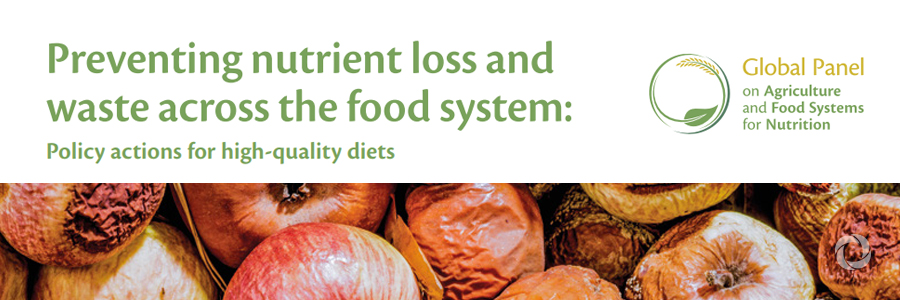
With one in five deaths associated with poor-quality diets, a policy brief launched urges policymakers to prioritize the reduction of food loss and waste as a way of improving people’s access to nutritious and healthy food.
The brief, Preventing nutrient loss and waste across the food system: Policy actions for high-quality diets, points out that poor-quality diets are now a greater public health threat than malaria, tuberculosis or measles. Meanwhile, approximately one-third of all the food produced for human consumption never reaches the consumer’s plate or bowl.
The brief was prepared by the Global Panel on Agriculture and Food Systems for Nutrition in partnership with the Food and Agriculture Organization of the United Nations (FAO).
It notes how foods such as fruits, vegetables, seeds, nuts, dairy products, meats, and seafood are rich in nutrients, but are also highly perishable and therefore susceptible to losses throughout the food system. The numbers are staggering: each year more than half of all the fruits and vegetables produced globally are lost or wasted. A vital source of protein, around 25 percent of all the meat produced – equivalent to 75 million cows – is not consumed.
Panel member and FAO Director-General of FAO, José Graziano da Silva, said: “To tackle all forms of malnutrition and promote healthy diets, we need to put in place food systems that increase the availability, affordability and consumption of fresh, nutrient-rich food for everyone. Taking specific actions to reduce the losses and waste of fresh and nutritious food is a fundamental part of this effort.”
Action across the entire food system
The brief proposes a series of policy actions across the entire food system, including educating stakeholders; focusing on perishable foods; improving public and private infrastructure; encouraging innovation; and closing the data and knowledge gaps on food losses and waste.
The value of food lost or wasted annually at the global level is estimated at $ 1 trillion. Eating more of the food already produced would also avoid the waste of the water, land and energy that went into its production.
Read and download the brief: Preventing nutrient loss and waste across the food system: Policy actions for high-quality diets
Original source: FAO
Published on 7 November 2018