
Add us as your preferred source on Google to see more of our content in Search.
 Add to Preferred Sources
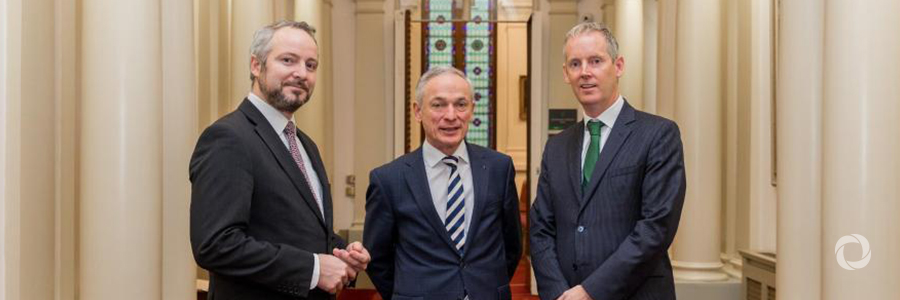
The EIB-European Investment Advisory Hub, in conjunction with the European Commission, the SBCI and the government funded Sustainable Energy Authority of Ireland (SEAI), hosted an event in Dublin examining how energy efficiency is financed in Europe. The Minister for Communications, Climate Action and the Environment, Richard Bruton T.D. attended the event which highlighted the importance of providing low-cost finance options for homeowners and businesses if ambitious targets for energy saving are to be met.
There are currently about 2 million homes in Ireland accounting for 25% of energy-related emissions. However, about half of these have a BER rating of D or less. Significant opportunities exist for business both in terms of savings and developing solutions. SEAI’s grant programmes are the main driver of activity among homes and businesses but many still feel the initial outlay is a barrier. If Ireland is to reach its targets then this must be overcome.
Opportunities exist across the country with a significant body of work in need of being carried out. This is good news for contractors but also makes financial sense for the state and for individual homeowners and businesses.
Addressing the role of the European Commission, its Vice-President for the Energy Union Maroš Šefčovič said: “To achieve the EU’s 2030 climate and energy goals, around EUR 180 billion of additional investments per year are necessary. Around 75% of those investments need to be channeled to improve energy efficiency in buildings. This requires developing and deploying breakthrough innovation on a massive scale, while both, public and private sectors need to play their part. We are mobilising our instruments to support Energy Efficiency in the built sector: Strategic Investment Fund, European Regional Development Fund, Smart Financing for Smart Buildings etc. We are stepping up our game. That is why during 2021-2027, the Commission envisages a 25% climate mainstreaming, meaning that more than EUR 300 billion of our funding would contribute to climate objectives.”
Original source: EIB
Published on 8 November 2018