
Add us as your preferred source on Google to see more of our content in Search.
 Add to Preferred Sources
WMO has hosted the first symposium and user summit of the Integrated Global Greenhouse Gas Information System (IG3IS), which aims to help inform and guide reductions in emissions of carbon dioxide and other heat-trapping gases which are driving climate change.
The urgency, complexity and economic implications of greenhouse gas reductions demand strategic investment in science-based information for planning and tracking emission reduction policies and actions.
IG3IS meets this need by combining atmospheric GHG concentration measurements with human-activity data in a modeling and analysis framework to help decision-makers take better-informed action to reduce emissions of greenhouse gases and air pollutants. These methods and projects are implemented in close partnership between technical experts and the user community.
“Every fraction of a degree of global warming matters, and so does every part per million of greenhouse gas concentrations,” said WMO Deputy Secretary-General Elena Manaenkova. “It is very important for the countries and cities to have objective information and measure their net contribution to global warming,” she said.
The three-day meeting, from 13-15 November, brought together technical developers and key users from a number of different sectors, including national emission inventory compilers and representatives of city and state agencies, as well as private sector stakeholders. They discussed their needs for data-driven greenhouse gas emission information, and the scientific community presented existing capabilities that can serve these needs and identified gaps.
IG3IS will help support the Paris Agreement on climate change, which aims to keep temperature increases by the end of the century to well under 2° Celsius via “nationally determined contributions” (NDCs) that vary by national capability and level of economic development.
“The best indicator of the success and vitality of the Paris Agreement are the very measurements of atmospheric concentrations of carbon dioxide and the other greenhouse gases that were the original cause for concern,” said Phil DeCola, Chair of the IG3IS Science Team.
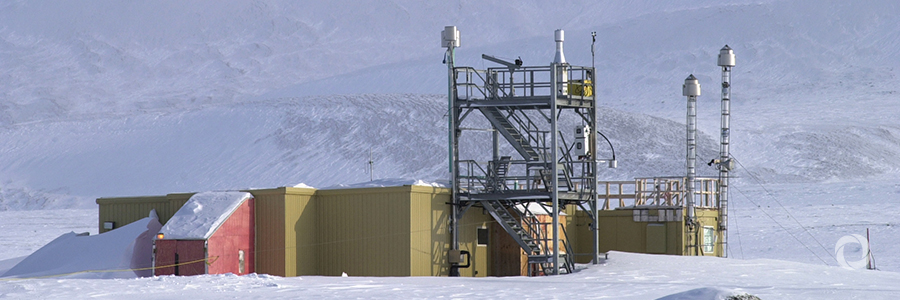
The WMO Global Atmosphere Watch measurement network and standards will form the backbone of the new system. Global Atmosphere Watch stations are situated all over the world, including in Polar regions, high in the mountains and on tropical islands.
“Politically, it is quite popular for cities to commit to climate mitigation plans. However, issues arise when they need to report emission inventories and track progress because there is a lack of data availability,” said Angel Hsu of Yale-NUS College, Singapore, in a comment, which was echoed by stakeholders of the national and private sectors.
The meeting identified a number of new opportunities where existing technical skills are ready to meet decision-support needs, as well as use cases for which partial technical solutions exist with a plan to fill the gaps toward meeting emerging user requirements. A number of actions were identified:
- In line with its founding principles, IG3IS will continue to cultivate active and intimate partnerships between its science team and the user communities it serves. This is essential for the co-development of methods and projects that will yield actionable information.
- IG3IS will have a focus on promoting new projects with stakeholders in nations, cities, and businesses in the developing world while continuing its successes in the developed world.
- The IG3IS science team will both continue to promote technological abilities for creating projects on a wider range of GHG emission information.
- IG3IS will broaden its portfolio within the private sector by offering services in the agricultural, forestry, waste management, and other land use and land use change sectors.
Original source: WMO
Published on 19 November 2018