
Add us as your preferred source on Google to see more of our content in Search.
 Add to Preferred Sources
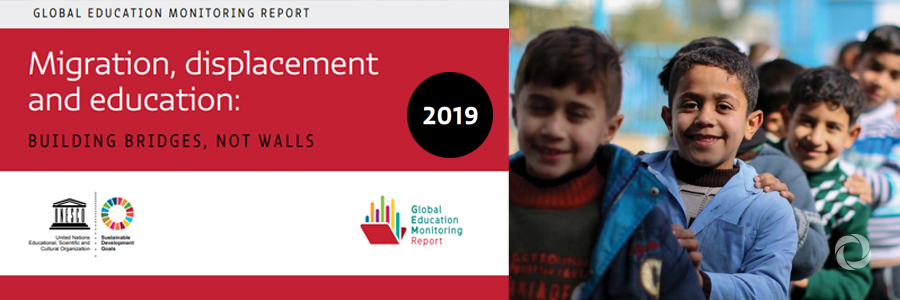
UNHCR, the UN Refugee Agency, today welcomed the release by UNESCO of a major global education report and in particular its focus on migration and displacement. With more than half the world’s 7.4 million refugee children denied schooling UNHCR’s Assistant High Commissioner for Protection, Volker Türk, said the report was a timely reminder that that commitment of the UN’s Sustainable Development Goals to leaving no one behind had to apply to families and children fleeing persecution and conflict too.
The report reinforces the importance of including migrants and forcibly displaced children and youth in national education systems as the only way to ensure inclusive and equitable education for all and contribute to stable and productive societies, in line with the Sustainable Development Goals.
Türk, who was speaking at the report launch in Berlin, said that with millions of refugees having to live in exile over many years – often far longer than a childhood – education was not only one of the most important ways to solve the world’s crises but also fundamental to responding effectively to any refugee emergency.
UNESCO’s report says that an increasing number of governments are assuming education responsibilities for refugee children in their national education systems, but it also highlights continued obstacles – including refugee children being detained while their asylum applications are being processed, the concentration of refugees in remote camps, absent funding, neighborhood deprivation, the special needs that many refugee children have, and language difficulties.
UNHCR’s own findings on education for refugee children have acknowledged a similarly troubled picture. In a report issued in late August and entitled Refugee Education in Crisis UNHCR said less than two-thirds of refugee children are getting to attend primary school, below a quarter in secondary school, and barely one in a hundred in higher education.
Türk said the adoption in 2016 of a New York Declaration on Refugees and Migrants and the forthcoming Global Compact on Refugees, under development for two years and expected to come before the UN General Assembly in mid-December, provided potential to fundamentally change the lives of refugees and host communities by promoting togetherness and inclusion, including in national education systems.
“Three main areas of focus are needed: First is the systematic inclusion of refugees in national education systems and plans, second is financing authorities and hosting communities to support education for refugees, and third is ensuring the children and young people are learning,” he said. “It is everyone’s business to educate refugees. The private sector, humanitarian and development organizations as well as governments must come together to increase funding for education and design more innovative, flexible and sustainable solutions to support education for refugees and ensure quality learning for all children.”
Read and download the full report “UNESCO’s Global Education Monitoring Report 2019”
Original source: UNHCR
Published on 20 November 2018