
Add us as your preferred source on Google to see more of our content in Search.
 Add to Preferred Sources
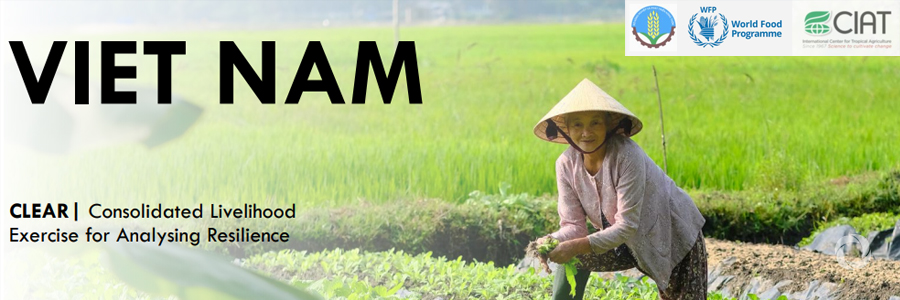
A report launched by the UN World Food Programme (WFP) and the Government of Viet Nam found that rural livelihoods in Viet Nam are highly sensitive to climate change, especially in the northern mountainous regions and the central highlands. The report also found that resilience must be boosted to safeguard food security and nutrition progress made in recent years.
WFP launched the Consolidated Livelihood Exercise for Analysing Resilience (CLEAR) report jointly with the Viet Nam Ministry of Agriculture and Rural Development and the International Centre for Tropical Agriculture (CIAT). Despite not having an operational presence in Viet Nam, in 2018 WFP has been using innovative technologies to analyse the resilience of Vietnamese communities to climate hazards.
“We cross-referenced satellite imagery and climate modeling with what we found on our joint field assessments,” said Justin Dittmeier, WFP’s Vulnerability Analysis and Mapping (VAM) Officer who co-authored the report. “Through a consultative analysis, we then mapped how resilient different livelihoods are to climate stresses,” he added.
The report details how among the 80 unique livelihood zones identified in Viet Nam, zones with upland paddy farmers were among the least resilient to climate change. The report urges that these areas, which are particularly vulnerable to climate change, continue to be targeted by government and partners, through their programmes and adaptation plans.
The CLEAR is an analytical approach developed by WFP to better understand how food security is affected by climate risks – whether they are related to extreme events (such as droughts, floods and cyclones), or to long-term gradual changes (such as shifting rainfall patterns, rising temperatures, or rising sea levels). WFP has conducted similar CLEAR analyses across Asia, including in Afghanistan, Cambodia, Laos, Sri Lanka and Timor Leste.
“The objective of the CLEAR is to inform the design and targeting of development programmes and policies related to climate change adaptation, by shedding light on how both current and future climate risks affect the most vulnerable people,” said Siemon Hollema, Senior Programme Advisor with WFP’s Regional Bureau for Asia and the Pacific.
WFP operations in Viet Nam ended in 2000 after 25 years that saw the economic and social transformation of the country. WFP, the world’s largest humanitarian agency, played a major role in Viet Nam’s protracted post-war rehabilitation, feeding tens of millions of people. At that time, the agency was Viet Nam’s largest grant donor of the entire UN system, investing approximately $500 million of food and non-food assistance in the country between 1974 and 2000. Since then, WFP has continued to monitor food security and disaster preparedness in the country.
Read and download the report.
Original source: WFP
Published on 4 December 2018