
Add us as your preferred source on Google to see more of our content in Search.
 Add to Preferred Sources
Knowing their HIV status gives people the means to seek treatment, but one in four people living with HIV are not aware they have the disease. In response, Unitaid is investing in innovative diagnostics to bring that knowledge to those in greatest need and often hardest to reach with HIV testing, including key populations, men and young people in Africa.
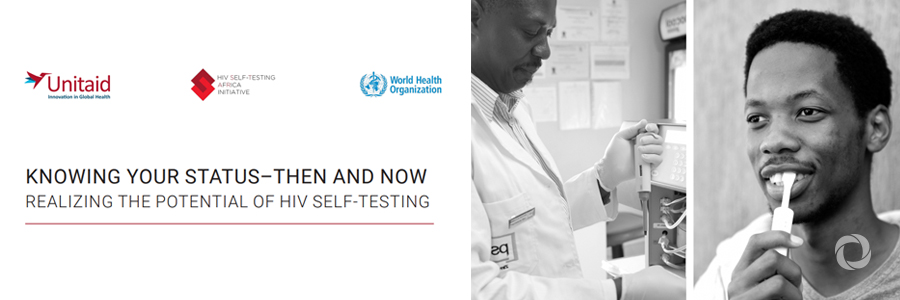
A report launched jointly with Population Services International (PSI), London School of Hygiene and Tropical Medicine and WHO unveils results of our HIV Self-Testing Africa (STAR) Initiative, which is generating the evidence for countries worldwide to scale up HIV self-testing and encouraging millions more people to find out their HIV status.
The report indicates an estimated 45 percent of people living with HIV in sub-Saharan Africa knew their status at the end of 2014, just before the STAR initiative was launched. It is now estimated 81 percent know their HIV status in sub-Saharan Africa.
The Unitaid-funded STAR initiative is the largest HIVST project globally. The evidence generated by this catalytic investment has directly informed WHO guidelines on HIV self-testing, released in December 2016, and led to the prequalification of two HIV self-testing products. As a result, 59 countries now have policies on HIV self-testing and 28 are actively implementing it, with an additional 53 reporting that a policy is under development.
“Unitaid has demonstrated bold leadership in increasing access to HIV testing through self-testing. WHO is privileged to be part of their successful work through STAR. The data and experience being generated by STAR continues to be critical in catalyzing HIV self-testing scale up in many other countries and regions” said Gottfried Hirnschall, Director of the HIV/AIDS Department and the Global Hepatitis Programme at WHO.
HIV self-testing offers a discreet and convenient way to test, with the potential to reach individuals in need of HIV testing services who may not otherwise seek a test. “Now, for many, testing for HIV does not have to mean traveling long distances, taking time from work, waiting in long lines or worrying about who might see them going for testing,” notes the report.
Unitaid’s HIV portfolio will reach $497 million in 2018 and continue to expand through 2020.
Read and download the Unitaid report
Original source: Unitaid
Published on 30 November 2018