
Add us as your preferred source on Google to see more of our content in Search.
 Add to Preferred Sources
More than 14 million adults and some 4.7 million children in Europe and Central Asia suffer from severe food insecurity – as defined by the Food Insecurity Experience Scale (FIES) – the Food and Agriculture Organization of the United Nations said in a report.
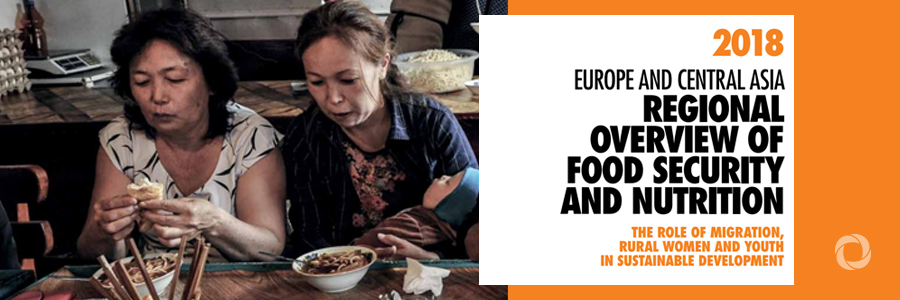
The Regional Overview of Food Security and Nutrition: Europe and Central Asia 2018 analyzes a wealth of country data on dietary energy supply, undernourishment and nutrition indicators, such as stunting and wasting, anaemia, overweight and obesity, and the effects of the shifts in people’s diets.
FAO estimates that some 2.1 percent of the region’s total population of nearly one billion was exposed to severe food insecurity in 2015-2017 based on FIES data.
“While the prevalence of severe food insecurity in Europe and Central Asia at around 2 percent is far lower than the world average of 9.2 percent, it still causes for concern especially in those countries with persisting hunger and malnutrition,” said FAO senior policy officer Ariella Glinni, the report’s principal author.
“We want to make sure no one is left behind and that there is access to nutritious food for all,” Glinni added. “To achieve this we also need to better understand the situation of different population groups, address the key underlying issues such as poverty, economic and social inequalities, conflicts and other factors”.
In the last decades, the region as a whole has achieved significant progress in fighting food insecurity, however, since 2014 the decreasing trend on the prevalence of undernourishment has been stagnating at 6 percent, and in 2016 and 2017 the number of undernourished people in Central Asia has been slowly growing in absolute terms.
Initial findings across the region show inequality between women and men in the prevalence of severe food insecurity. In the Caucasus, Central Asia, and the European Commonwealth of Independent States countries, adult women were found with a higher rate of severe food insecurity than men.
The role of migration, gender and youth
The report also reviews linkages between migration, gender, youth and rural development and food security and highlights how the Europe and Central Asia region ranks second in the world for receiving migrants: 78 million international migrants of the total 258 million worldwide in 2017.
Migration – whether within a country or across borders – can become a source of development opportunity. In recent years, remittances sent home by migrant workers have lifted millions of families out of poverty and food insecurity. Remittance flows within the region in 2017 were estimated at US$ 44 billion.
More women and young people are migranting – trends driven mainly by unemployment in many countries of the region.
The report draws on country experiences to highlight measures aimed at mitigating the negative consequences of migration on food security and harnessing its development potential. These include support measures for migrants returning to their country of origin, and the potential of rural development to offer alternative livelihood options to involuntary migration – areas that deserve greater attention and investment.
Read and download The Regional Overview of Food Security and Nutrition: Europe and Central Asia 2018
Original source: FAO
Published on 11 December 2018