
Add us as your preferred source on Google to see more of our content in Search.
 Add to Preferred Sources
The 9th Annual Forum on Sustainable Innovation was held within the framework of the 24th Conference of the Parties to the United Nations Framework Convention on Climate Change (COP24). At the forum, climate finance experts met to discuss subsequent actions.
The panel involving Financing Sustainable Growth had the participation of representatives from Denmark’s Ministry of Energy, Supply and Climate; the International Financial Corporation of the World Bank; the Central American Bank for Economic Integration (CABEI) and the Global Environment Fund. The event was moderated by the representative of CDP (previously Carbon Disclosure Project).
“CABEI has provided its support through several phases that include the establishment of a cross-cutting Environmental Sustainability axis to its three strategic axes. This guarantees that all the Bank’s interventions are made under a framework of resilient use of resources that facilitates the introduction of adaptation and mitigation concepts included in its environmental and social policy, thereby helping to support the national and regional efforts of its member countries in the fight against the effects of climate change,” said Country Manager for Costa Rica, Mr. Mauricio Chacón.
CABEI, aware of the problems that affect the region and as the financial agent of the countries of the Central American Integration System (SICA), has adopted a series of measures and actions for the adequate management of mitigation, prevention and adaptation to such events, which contribute to efficiently and timely supporting of the requirements of the Central American region. For this reason, the role of the Bank has been to catalyze resources and provide solutions to the challenges of this problem.
For example, during the 2010-2014 period, CABEI allocated US$5.11 billion of total approvals to projects that benefit the adaptation and mitigation of the countries of the region to the effects of climate change; this was equivalent to 67% of total approvals for the period.
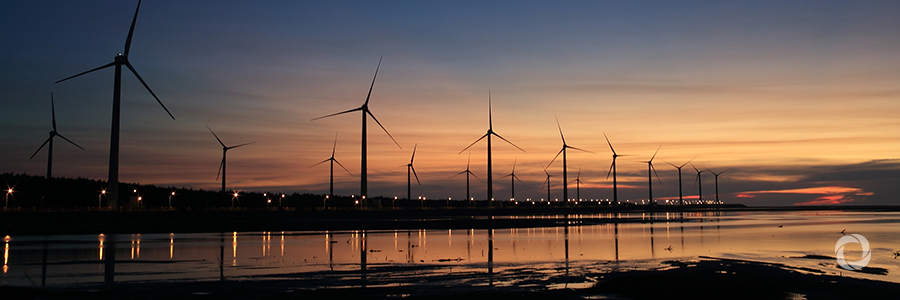
Regarding the contribution of the projects approved during the analysis period, the renewable energy sector stands out for the financing of hydroelectric, wind, biomass, photovoltaic and geothermal projects. The renewable energy projects have a direct effect in the reduction of 3.1 million tons of annual CO2 emissions from the operation of the projects approved during 2010-2014, preventing the emission of Greenhouse Gases (GHG) through a reduction in the dependence on non-renewable energy sources, as well as supporting the diversification of the energy matrix of the region’s countries.
In addition, during the 2011-2014 period, CABEI disbursed US$42.9 million through intermediated resources, of which US$28.8 million were allocated to renewable energy projects and US$14 million to energy efficiency projects, thus contributing to the mitigation of CO2 emissions.
Original source: BCIE
Published on 10 December 2018