
Add us as your preferred source on Google to see more of our content in Search.
 Add to Preferred Sources
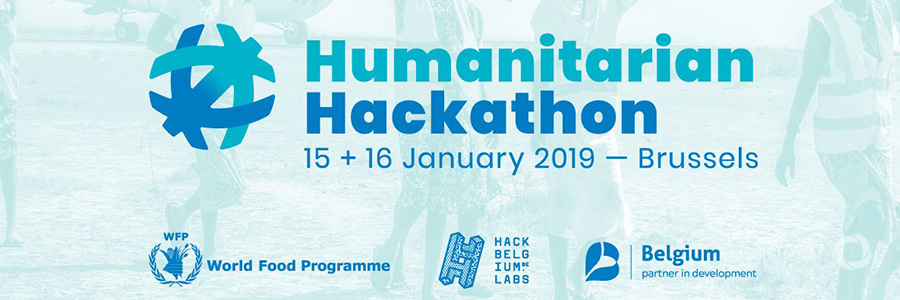
The UN World Food Programme (WFP) together with the Belgian Ministry for Development Cooperation and Hack Belgium Labs are inviting technology and innovation champions to join the first ever Humanitarian Hackathon focused on food security. It will take place at Egmont Palace in Brussels on 15-16 January 2019, aiming to develop technology-driven solutions for some of today’s most pressing humanitarian challenges.
This two-day event will bring together international and Belgian humanitarian organisations, donors, large companies, start-ups, scientists, academics and engineers to generate new ideas, build prototypes and launch new projects that could help save and change millions of lives around the world.
WFP has identified six key challenges faced by the humanitarian sector, such as improving humanitarian access in hard-to-reach areas, optimising data management, adapting to climate change, connecting smallholder farmers to markets, leveraging local food production for school meals, and using technology to predict population movements. Participants will form teams that will address these challenges either by developing prototypes using new technologies or through harnessing the existent resources from multiple stakeholders.
The Humanitarian Hackathon aims to leverage cutting-edge technologies and solutions, which can help create a world without hunger by 2030. After decades of decline, global hunger is on the rise again, making the Hackathon’s challenges extremely timely and relevant. As many as 821 million people – one in nine – go to bed on an empty stomach each night. Finding new ways to deliver aid more efficiently and effectively is crucial to alleviate their suffering and turn #ZeroHunger into reality.
Original source: WFP
Published on 17 December 2018