
Add us as your preferred source on Google to see more of our content in Search.
 Add to Preferred Sources
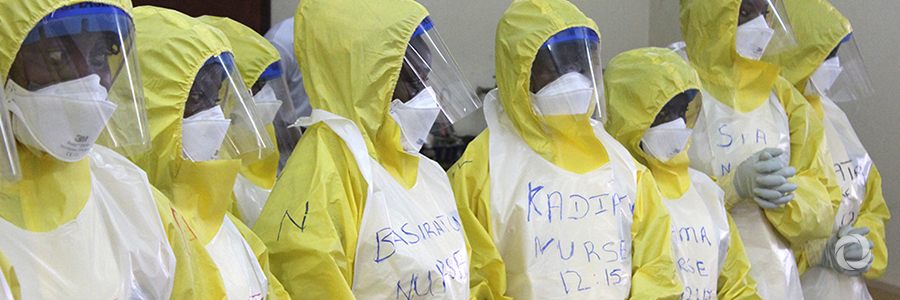
On December 19, 100 health care professionals graduated from Infection Prevention and Control (IPC) training courses at a ceremony in Bo, Sierra Leone – held in partnership with the International Organization for Migration (IOM), the United States Agency for International Development (USAID) and Njala University.
During the unprecedented Ebola outbreak in Sierra Leone in 2014, more than 400 health care workers perished from the disease while providing life-saving assistance to infected patients.
Communities throughout Sierra Leone continue to struggle with significant health challenges and diseases, including malaria, cholera, typhoid, STIs/HIV/AIDS, respiratory tract infections, Lassa fever, maternal and child mortality, and tuberculosis.
Graduates leave the training programme with sound knowledge of IPC practices that will protect themselves, their patients and their communities during future outbreaks as well as prevent the spread of infectious diseases.
Since January 2018, 11 certified professors delivered 10-day clinical and five-day non-clinical courses at Njala University’s three campuses—Mokonde, Kowama and Towama. Mobile teams of instructors travelled to 15 schools, reaching additional students in Bo, Bonth, Kailahun, Kenema, Makeni, and Tonkolili. In total, more than 3,000 successful students will receive a certificate of merit from Njala University by the end of 2019.
In October 2016, USAID granted the Ministry of Health and Sanitation (MoHS) USD 3 million for the Establishment of Infection Prevention and Control Short Courses and Mobile Training project to strengthen the health care system in the country. The project aimed to deliver static and mobile training to 3,240 students; and establish IPC simulation skills and Information and Communications Technology (ICT) laboratories.
Original article and picture source: IOM
Published on 21 December 2018