
Add us as your preferred source on Google to see more of our content in Search.
 Add to Preferred Sources
Lack of progress on addressing water and sanitation challenges threatens to undermine the efforts of Yemeni institutions and the international community to prevent the spread of the cholera epidemic in Yemen.
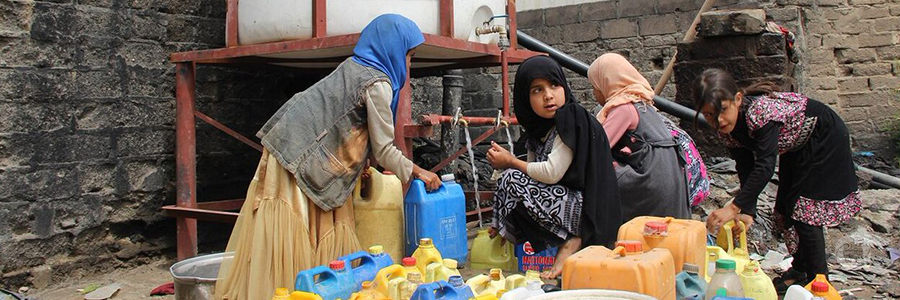
In the last four years, Yemen’s water and sanitation infrastructure has suffered significant damages due to the ongoing war, the lack of energy, poor maintenance, and more than three years of unpaid salaries of civil servant staff. Approximately 16 million people currently lack access to safe water and sanitation, and some 18 million lack access to basic healthcare. Over one million cases of cholera have been confirmed since the epidemic erupted last year.
The World Bank has worked tirelessly with UNICEF and WHO to ensure a timely response to the prevailing cholera outbreak through the Emergency Health and Nutrition Project in Yemen. This IDA funded grant provided improved water services in cholera-affected areas to 1.6 million people and rehabilitated water and sanitation facilities in health centers, schools and communal gathering places. Water treatment has been provided through bulk chlorination of water sources, piped networks and private water trucks. Hygiene kits have also been distributed to schools and homes, and in cholera-affected areas, 1.85 million people have been provided with improved access to sanitation.
Despite all efforts, the scene in Yemen remains challenging. Yemenis face a range of threats every day, from the ongoing conflict to skyrocketing prices of basic commodities and lack of basic services. These threats can be fatal. This is especially true in isolated regions such as the Maswar district of Amran governorate where roads are rough, and cholera is prevalent.
In partnership with the World Bank, UNICEF has so far trained 850 Rapid Response Teams that now belong to the General Authority of Rural Waters Supply Project (GARWSP). The training was part of the Emergency Health and Nutrition Project, and it aims to train two-person teams to respond to the cholera outbreak in many districts throughout Yemen.
Original source: World Bank
Published on 15 January 2019