
Add us as your preferred source on Google to see more of our content in Search.
 Add to Preferred Sources
Humanitarian aid and development projects often take place in difficult locations. The need for a diverse and gender-balanced workforce to implement these projects can’t be ignored – here’s why.
The people working in international development should be representative of the people whose needs are being served. In too many places, that’s not the case – especially when it comes to women.
UNOPS implements projects around the world – including in locations where its project teams have uneven gender representation. In conflict-affected countries, in particular, women are underrepresented.
Outreach activities can be a very effective way of connecting with more women interested in pursuing a career in the humanitarian and development sectors. Targeting different networking groups can help to increase the pool of applicants. In Nepal, for example, UNOPS has a women’s network that connects recruiters with women working in the construction industry – especially important given our expertise in infrastructure implementation.
But for gender parity to become a reality in any organization, there must also be viable options to balance one’s professional and private life. Opportunities for true work-life balance must exist – for both women and men.
“We’re also taking concrete actions to recruit more women into senior roles. If less than 20 percent of the applicants for senior level posts are women, the hiring manager must outline the measures initially taken to reach out to and attract female applicants. Without a strong justification, the vacancy announcement must be extended or reopened.”
The benefits of having gender-balanced project teams extends far beyond any one particular organization. It can help to provide long-term socio-economic opportunities for people, local communities and countries alike.
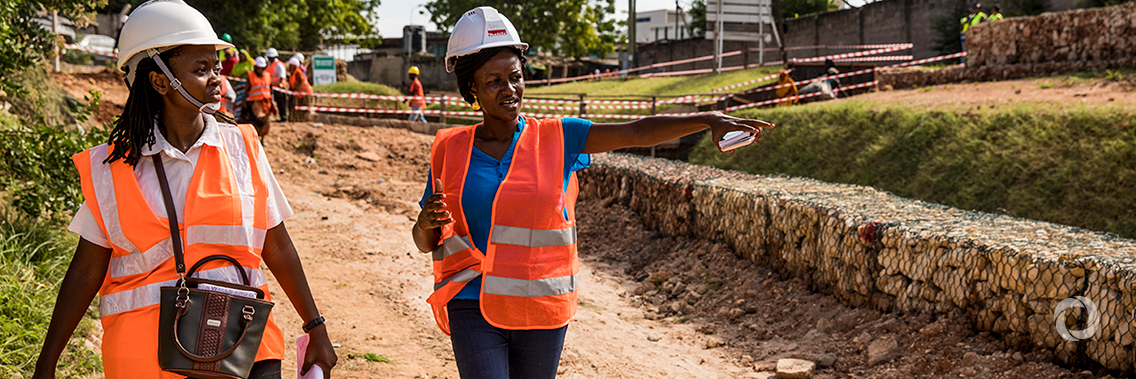
Seeing highly qualified women working across a range of jobs on UNOPS-implemented projects in their local communities can also inspire other women and girls to pursue careers in traditionally male-dominated fields.
Original source: UNOPS
Published on 21 January 2019