
FAO calls for policies and investments targeting sustainable water use in the Middle East and North Africa
Add us as your preferred source on Google to see more of our content in Search.
 Add to Preferred Sources
It is imperative to scale up policies and investments in the Middle East and North Africa to make water use in agriculture more sustainable and efficient and to ensure that all the people in the region have access to healthy diets, FAO Director-General José Graziano da Silva said.
“Here in the Middle East and North Africa region, water scarcity is certainly one of the main challenges for agriculture production and development,” he told agriculture ministers and private sector representatives at the Agriculture, Fisheries and Food Investment Forum in Oman.
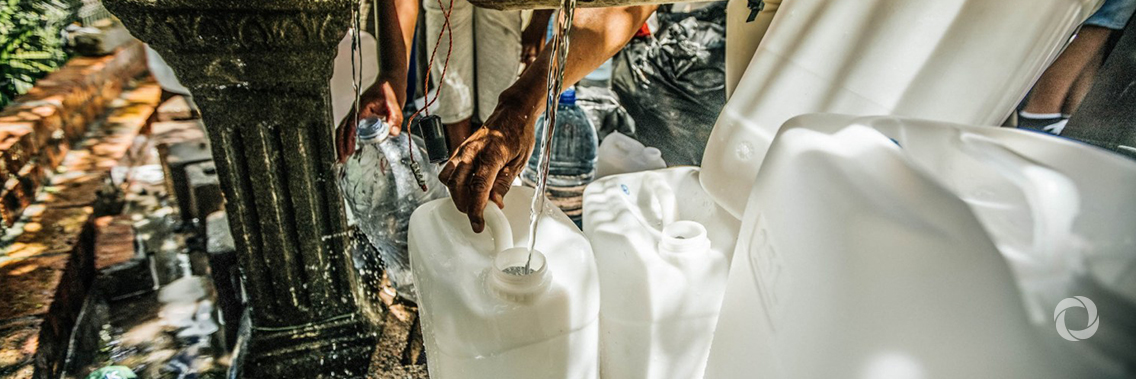
The region has some of the lowest levels of freshwater in the world, and these mainly underground, non-renewable stocks are being depleted. Freshwater has reduced by 60 percent in the last four decades and is expected to fall a further 50 percent by 2050. Agriculture accounts for 85 percent of the water use, and it will likely be the hardest hit by further shortages.
Graziano da Silva also urged governments and private sector representatives to take action to transform food systems in a way that allows people to consume fresher, healthier and more nutritious food, warning about the rising level of overweight and obesity malnutrition.
“About 2 billion people in the world are overweight nowadays. Out of the 670 million are obese adults. This is about one out of 8 adults is obese. Here in this region, the proportion of obese adults is even higher about 30 percent – that means one out of 3 are obese. The growing rates of obesity is happening at a huge socio-economic cost,” said Graziano da Silva.
This is particularly worrisome when countries have an excessive dependency on food imports as is the case in the region.
“Promoting the consumption of fish is another way of tackling malnutrition, as well as of promoting economic growth and alleviating poverty,” added Graziano da Silva.
Growing more with less
FAO believes that saving water is not only a good practice, it might soon have to be the only practice.
Integrated Aquaculture Agriculture (IAA) is one way of saving water and producing more with less.
Aquaponics is an example of such IAA that combines aquaculture, the practice of fish or aquatic animal farming, and hydroponics, the cultivation of plants in water without soil. This means that water is used both for raising fish and growing crops.
Farms using the aquaponics system can reduce water consumption by 90 percent compared to traditional agriculture.
FAO’s support to fisheries
FAO plays a leading role in international fisheries policy, and works with governments, regional fisheries bodies, cooperatives, fishing communities and other partners to promote sustainable fisheries and aquaculture, and ensure their growth.
This includes the implementation of the Blue Growth Initiative, the Code of Conduct for Responsible Fisheries and the Port State Measures Agreement (PSMA).
To date, only four countries (Libya, Mauritania, Oman and Sudan) from the Middle East and North Africa Region are part of the Port State Measures Agreement.
At the forum, FAO’s Director-General urged all countries around the world to be part of the Agreement, and called upon the leadership of Oman – the only country of the Gulf to have joint the Agreement – to work closely with FAO “to ensure that all countries of the Gulf follow their good example and join the Port State Measure Agreement”.
Original source: FAO
Published on 23 January 2019