
Add us as your preferred source on Google to see more of our content in Search.
 Add to Preferred Sources
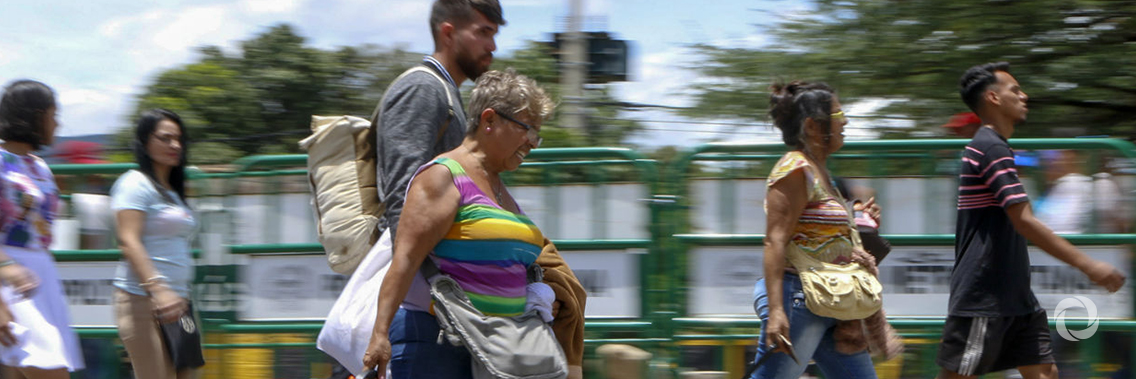
Attacks and hate speech against Venezuelans seeking shelter in neighboring countries should be condemned “with a clear and forceful message of rejection” and solidarity, a top UN refugee agency (UNHCR) and UN migration agency (IOM) official said.
Eduardo Stein, Joint UNHCR-IOM Special Representative for and migrants, made his comments after the UN Security Council met at the weekend to discuss the situation in the country, where opposition leader Juan Guaidó declared himself President on 23 January.
“Although isolated and unrepresentative, these acts of hatred, intolerance, and xenophobia are extremely worrying,” Mr. Stein said, in his appeal to “several” unnamed countries.
While urging “political and opinion leaders” to call for “peace, justice, calm and restraint”, Mr. Stein also highlighted the importance of responsible traditional and online media reporting.
According to UNHCR and IOM, thousands of people continue to leave Venezuela every day, amid an ongoing humanitarian crisis linked to an economy in freefall and continuing political upheaval.
More than three million Venezuelans have left their country since 2015, with 2.4 million in neighboring or nearby countries. Most are in Colombia, which houses well over one million who have fled their homes.
This is followed by Peru (more than 500,000) Ecuador (more than 220,000), Argentina (130,000) Chile (more than 100,000) and Brazil (85,000).
In addition to South American countries, countries in Central America and the Caribbean also recorded increasing arrivals of refugees and migrants from Venezuela. Panama, for example, hosts at least 94,000 Venezuelans.
In response to South America’s biggest exodus in its history, UNHCR and IOM announced the creation of a regional initiative in May 2018 to support governments as they sought to aid refugees and migrants from Venezuela.
This Regional Platform is open to organisations that have the capacity to respond to the needs of Venezuelan refugees and migrants; it has more than 30 member-organizations, including UN agencies, non-governmental organizations and two Red Cross movements.
“Only through dialogue, solidarity, justice, coexistence and respect for diversity can we solve the multiple challenges that confront our region,” he said. “Given the current humanitarian and political challenges, Latin America must remain faithful to its tradition of solidarity.”
Original source: UN News
Published on 28 January 2019