
Add us as your preferred source on Google to see more of our content in Search.
 Add to Preferred Sources
Smartphones have revolutionized our daily lives. From instant messaging to global interaction at our fingertips, today’s communication is fast, efficient and low-cost.
But how smart are our phones when it comes to the impact on the environment? Do you know what’s in your smartphone?
There have been significant steps taken by big players in the technology industry to clean up their act, but environmental, social and economic concerns, particularly around human rights, remain concerning our extraction of precious metals in general.
Gold, silver, cobalt, tin, tantalum, tungsten and copper are all essential components of mobile phones and other electrical devices we use daily. And, since mining is one of the most intensive users of heavy fuel oil, extraction contributes significantly to climate change.
Public awareness can go some way towards promoting a mineral sector that contributes to sustainable socio-economic development. While negative mining impacts are inevitable, many can be avoided along the mining cycle.
Our smartphones are among the most resource intensive by weight on the planet. They also contain palladium and platinum, and less valuable but still significant aluminium and other rare materials that are difficult to mine.
Yet, most companies publish little information on their suppliers, keeping environmental performance and impacts out of sight. There is also a lack of urgency and transparency in tackling global e-waste.
Despite the valuable materials contained within, the electronics industry generates up to 41 million tonnes of e-waste each year. Less than 16 percent of global e-waste volumes are recycled in the formal sector.
Feng Wang, Programme Officer at UN Environment for Life Cycle Thinking and Sustainable Consumption and Production, said:
“Beyond carbon footprint, the biggest environmental concern where e-waste is concerned is the impact at the end of a product’s life. Recycling practices, especially in developing countries, mean that pollution from hazardous materials and metals at dumping sites has grave consequences for the local environment and informal workers.”
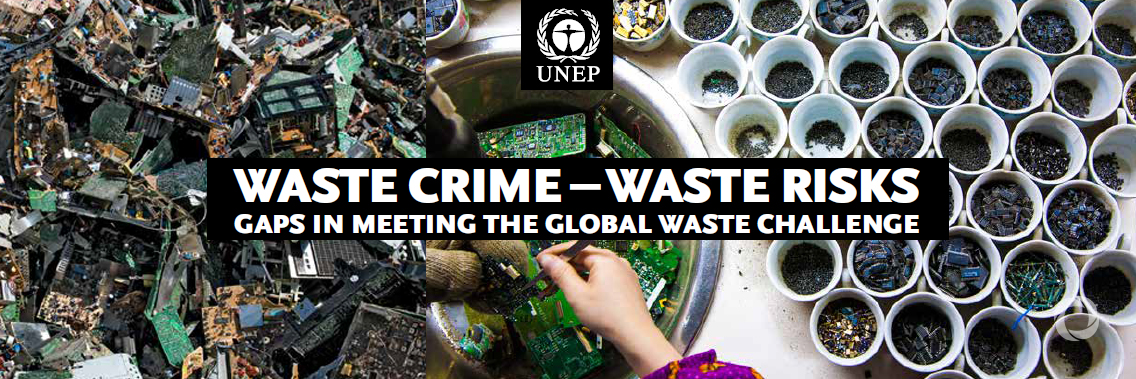
The UN Environment report “Waste crime – Waste risks” highlights that e-waste—electrical equipment including computers, mobile phones, television sets and refrigerators—also emits toxic mercury, arsenic, zinc-lead and brominated flame-retardants.
Yet, around 80 percent of the carbon footprint of a smartphone occurs during the manufacturing process, with 16 percent down to consumer use and 3 percent accounted for by transport.
And as demand for smartphones rises, the lifespan of devices shrinks. Increasingly sophisticated smartphones are discarded. Tough competition drives mobile companies to produce the next, best, latest, thinner and smarter phone.
Product lifetime is getting shorter and shorter, thus less sustainable,” said Wang. “We can all play a part, by recycling, reselling or repurposing our smartphones with responsible organizations. But recycling or buying fewer models won’t solve the problem alone.”
In 2016, around 435,000 tonnes of mobile phones were discarded across the globe, with an estimated cost in raw materials of US$10.7 billion. If all phones had a longer life span and could enter a second-hand market, the value could be even higher.
Making our phones truly smart not only entails recycling, upcycling and repurposing materials that go into them. But also, building them to last: reducing our phone footprint and designing sustainable models which make waste in the long term a thing of the past.
Read and download the report: Waste Crime – Waste Risks Gaps in Meeting the Global Waste Challenge: A Rapid Response Assessment
Original source: UN Environment
Published on 29 January 2019