
Add us as your preferred source on Google to see more of our content in Search.
 Add to Preferred Sources
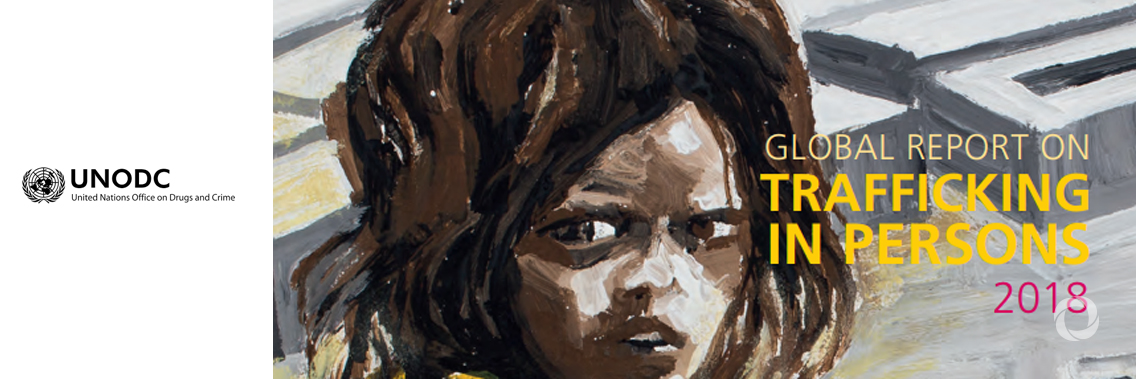
The latest Global Report On Trafficking In Persons, released on January, 29 by the United Nations Office on Drugs and Crime (UNODC) at UN headquarters in New York, shows a record-high number of cases detected during 2016, but also the largest recorded conviction rate of traffickers.
“The report was undertaken for a simple reason: if we want to succeed in confronting human trafficking in all its manifestations, we must better understand its scope and structure,” said Yury Fedotov, UNODC’s Executive Director as he presented the report in New York. “We need to appreciate where human trafficking is happening, who are its victims and who is perpetrating this crime.”
According to the latest figures compiled by UNODC, the record conviction and detection rates could either be a sign that countries have strengthened their capacity to identify victims – such as through specific legislation, better coordination among law enforcement entities, and improved victim protection services – or, that the number of actual instances of trafficking has increased.
While in 2003 fewer than 20,000 cases had been recorded, the number of cases recorded in 2016 had jumped to over 25,000.
Despite improvements in data collection, impunity prevails
Over the last decade, the capacity of national authorities to track and assess patterns and flows of human trafficking has improved in many parts of the world. UNODC’s report notes that this is also due to a specific focus of the international community in developing standards for data collection. In 2009, only 26 countries had an institution which systematically collected and disseminated data on trafficking cases, while by 2018, the number had risen to 65.
However, many countries in Africa and Asia continue to have low conviction rates, and at the same time detect fewer victims which, UNODC stresses, “does not necessarily mean that traffickers are not active”.
In fact, the report shows that victims trafficked from areas of the world with low detection/conviction rates are found in large numbers in other areas of the world, suggesting that a high degree of impunity prevails in these low-reporting regions.
Women and girls remain a major target
Traffickers the world over continue to target women and girls,” wrote Executive Director Fedotov, in the report’s preface. ‘The vast majority of detected victims of trafficking for sexual exploitation and 35 percent of those trafficked for forced labor are female.”
Armed conflict and displacement, a key driver of human trafficking
The report shows that armed conflicts can increase vulnerability to trafficking in different ways as areas with weak rule of law and lack of resources to respond to crime, provide traffickers with a fertile terrain to carry out their operations, preying on those who are desperately in need.
The study shows that in all the conflicts examined for the report, forcibly displaced populations (refugees and internally displaced families) have been specifically targeted: from settlements of Syrian and Iraqi refugees to Afghans and Rohingya fleeing conflict and persecution.
“While we are far from ending impunity, we have made headway in the 15 years since the Protocol against Trafficking in Persons entered into force,” said UNODC’s chief Mr. Fedotov, as he noted that “nearly every country now has legislation in place criminalizing human trafficking”.
“The international community needs to accelerate progress to build capacities and cooperation, to stop human trafficking in conflict situations and in all our societies where this terrible crime continues to operate in the shadows,” he stated in the report’s preface.
Read and download the Global Report On Trafficking In Persons.
Original source: UN News
Published on 29 January 2019