
Add us as your preferred source on Google to see more of our content in Search.
 Add to Preferred Sources
Japan has contributed over $8 million (JPY 891,000,000) to back FAO’s work on enhancing food and nutrition security for the most vulnerable households in conflict-ridden Yemen, which is facing the world’s largest humanitarian crisis.
This will be achieved through the provision of crucial agricultural inputs and services, including the distribution of cereal and legumes seeds, restocking of livestock, and the rehabilitation of irrigation systems and other agricultural facilities, using “cash for work”. These interventions will help food insecure households produce life-saving food and generate income as well as stimulate local economies through rural job creation.
The two-year project aims to reach about 200 000 conflict-affected Yemenis.
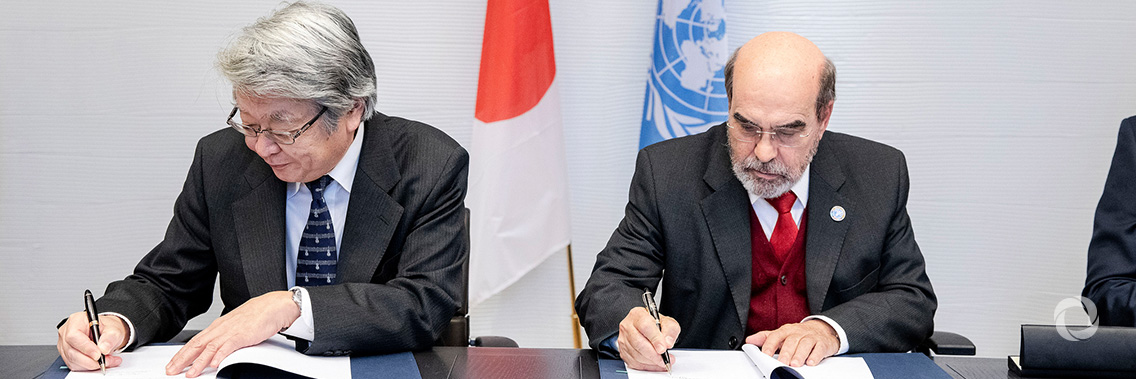
The funding agreement was signed at FAO headquarters in Rome by Ambassador of Japan to Italy and Permanent Representative to FAO Keiichi Katakami and FAO Director-General José Graziano da Silva.
“FAO is on the frontlines in the fight against hunger in Yemen, providing extremely vulnerable people with the means to resume and maintain food production for their families and their communities,” said Graziano da Silva. “This generous contribution from the Government of Japan allows us to continue supporting the Yemeni people in this time of their greatest need. It will enable FAO to help save the lives and the livelihoods of the country’s most food insecure people and to put agriculture back on track to reduce their dependence on food assistance and food imports in the long run”.
“It is our great pleasure to announce that Japan will support FAO’s work through this project which aims to enhance the agricultural productivity of more than 27,500 households”, said Katakami. “This project will provide critical humanitarian assistance to rural populations by improving agricultural and livestock sectors, which would stimulate household food production and build their resilience to the crisis”.
Under the project, FAO also intends to focus on emergency livestock assistance and protection. Provision of animal feed and animal health services such as vaccination campaigns will ensure that products, especially milk, are available to the most vulnerable members of the poor families – especially children, pregnant women and lactating mothers.
In addition, the Japanese funding will enable FAO to improve food production practices and strengthen communities’ ability to manage land, soil and water resources in a sustainable manner.
FAO-Japan partnership
Japan is the second largest contributor to FAO’s regular budget and a leading voluntary contributor to FAO’s ongoing field programmes. Between 2014 and 2017, Japan generously invested more than $310 million, including $90 million in voluntary contributions. In 2018, Japan’s essential support to FAO’s global humanitarian programme reached just over $17 million.
Original source: FAO
Published on 31 January 2019