
Add us as your preferred source on Google to see more of our content in Search.
 Add to Preferred Sources
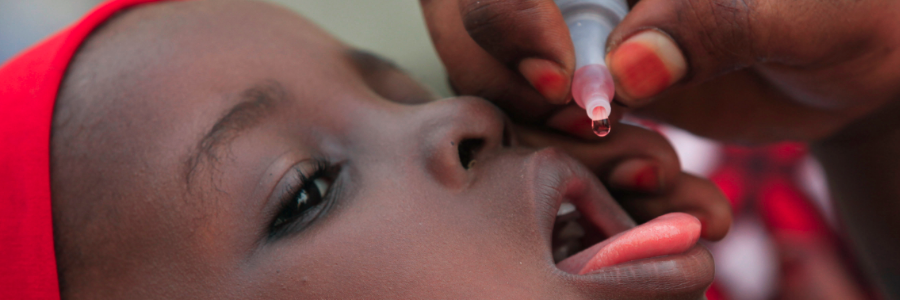
Governors, Legislators, the Sultan of Sokoto, Government functionaries and Development partners on 8th July 2017 converged in Sokoto state to flag-off the July 2017 round of Sub-National Immunization Days (IPDs) campaign. The symbolic occasion was a unique opportunity to demonstrate collective commitment in the final battle against the poliovirus in Nigeria.
The re-emergence of wild polio viruses (WPVs) in July 2016 in north eastern Nigeria, after a silent period of close to two years, provided lessons for Nigeria and the global programme about the capacity of the virus to sustain circulation for years in areas of poor coverage and sub optimal surveillance. An aggressive response was mounted by the government following the outbreak within a complex security environment and humanitarian emergency in the north east.
“We are very committed in our collective desire to partner with all relevant government agencies and Global Polio Eradication Initiative partners to rekindle the fight against polio until no child is infected with the crippling disease,” Governor, His Excellency Aminu Waziri Tambulal of Sokoto.
To buttress his personal resolve in that regard, the Governor informed that Sokoto state, which isolated seven out of 11 vaccine-derived polioviruses (VDPVs) in 2017, has allocated 15% of its budget to funding healthcare services, particularly immunization of children 0-59 months of age.
The Governor’s message resonated with that of northern traditional and religious leaders as His Eminence, the Sultan of Sokoto and Chairman of the Supreme Council of Islamic Affairs in Nigeria, Sir Muhammadu Sa’ad Abubakar III, restated that they would ensure the vaccination of every eligible child since religion does not prohibit immunization. He utilized the event to call on all caregivers to ensure compliance to the laudable cause and rid society of the crippling disease once and for all.
The World Health Organization (WHO) is supporting the Nigerian Government to eradicate polio by providing technical support, strengthening surveillance for acute flaccid paralysis and routine immunization. Additionally, 390,000 polio vaccination team members are engaged across 36 states, the Federal Capital Territory and paid through WHO’s Direct Disbursement Mechanism during National immunization campaigns.
Speaking on behalf of GPEI partners, the WHO Expanded Programme on Immunization Team Leader, Dr Fiona Braka commended the political, traditional and religious leadership in the drive towards a polio-free Nigeria. She noted that remarkable progress has been made in Nigeria in reducing the number of WPV cases over the past decade from as high as 796 cases in 2008 to zero in 2015.
Source: WHO. Read full information.
10 July, 2017