
World in grip of ‘high impact weather’ as US freezes, Australia sizzles, parts of South America deluged
Add us as your preferred source on Google to see more of our content in Search.
 Add to Preferred Sources
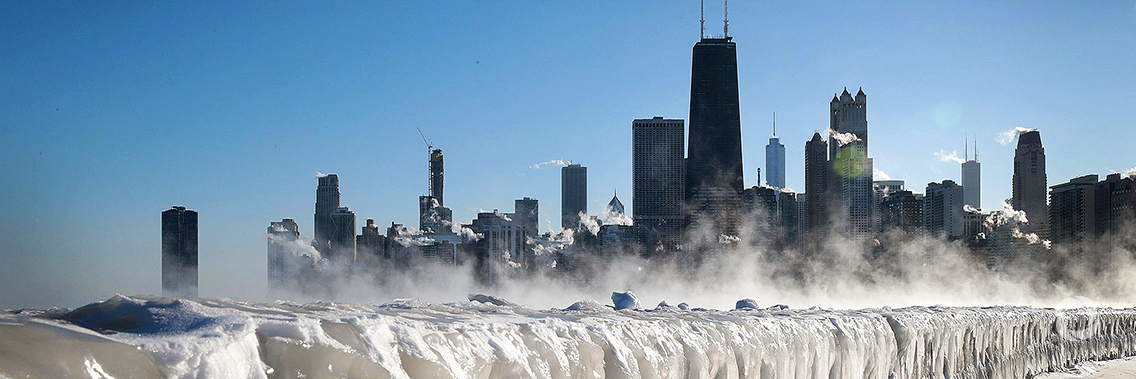
“High impact weather” has gripped much of the world so far this year, the UN weather agency, WMO, reported, with “dangerous and extreme cold in North America, record high heat and wildfires in Australia, heavy rains in parts of South America, and heavy snow on the Alps and Himalayas.
The WMO assessment of January’s weather, describes it as “a month of extremes”, with large parts of North America gripped by bitterly cold temperatures, caused by the influence of the Polar Vortex.
In southern Minnesota, reports the UN weather agency, the wind chill factor pushed readings down to minus 65°F (-53.9°C) on 30 January. The national low-temperature record was measured at minus 56 °F (-48.9°C).
“Disturbances in the jet stream and the intrusion of warmer mid-latitude air masses can alter the structure and the dynamics of the Polar Vortex, sending Arctic air south into middle latitudes and bringing warmer air into the Arctic. This is not a new phenomenon, although there is increasing research into how it is being impacted by climate change”, the agency said.
“In general, and at the global level, there has been a decline in new cold temperature records as a result of global warming. But frigid temperatures and snow will continue to be part of our typical weather patterns in the northern hemisphere winter. We need to distinguish between short-term daily weather and long-term climate”, he added.
During January, severe winter storms also hit the eastern Mediterranean and parts of the Middle East, severely affecting vulnerable populations lacking adequate shelter, including refugees.
A cold front in the third week of January that swept south through the Arabian Peninsula, bringing a widespread dust storm from Egypt to Saudi Arabia, Bahrain, Qatar, Iran and the United Arab Emirates, also brought heavy rain and precipitation to Pakistan and northwest India, reports WMO.
Original source: UN News
Published on 01 February 2019