
Add us as your preferred source on Google to see more of our content in Search.
 Add to Preferred Sources
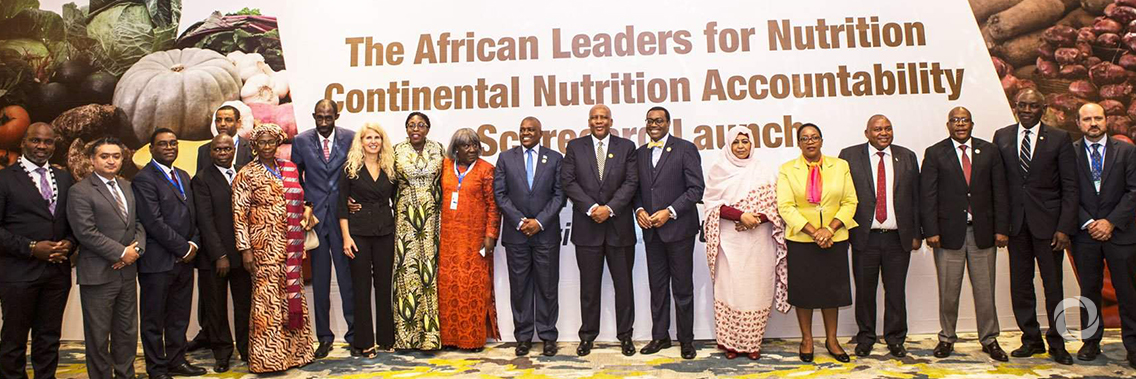
The African Union Commission, the African Development Bank, and global partners launched the Continental Nutrition Accountability Scorecard to raise awareness and reinforce commitments by African governments to help end malnutrition.
His Majesty King Letsie III of the Kingdom of Lesotho and African Union Champion for Nutrition, and Dr. Akinwumi A. Adesina, President of the African Development Bank co-hosted the scorecard launch on the sidelines of the 32nd Ordinary Session of the Assembly of Heads of State and Government of the African Union in Addis Ababa, Ethiopia.
“The nutrition accountability scorecard offers an opportunity to lay a solid foundation to aid African leaders to act strategically and deliberately in implementing policies and investing in nutrition programmes that tackle malnutrition in our respective countries,” King Letsie III told attendees.
In attendance were Dr. Mokgweetsi Eric Keabetswe Masisi, President of the Republic of Botswana, members of the diplomatic corps, health ministers from Malawi, Botswana, Kenya, Senegal, Gambia, Ghana, and development partners including FAO, WHO, UNFPA, UNICEF.
In his remarks, President Masisi commended the Bank for the initiative. “I am so proud about the African Development Bank’s involvement… the scorecard is an extremely useful tool. It is important to get a continental picture of the state of our nutrition so that we ask ourselves the right questions to make sure we get our priorities right and fix them,” he noted.
The Continental Nutrition Accountability Scorecard is produced by the African Leaders for Nutrition Initiative (ALN), headquartered at the African Development Bank, in collaboration with ALN’s partners including the Global Panel on Agriculture and Food Systems for Nutrition, and the Bill and Melinda Gates Foundation.
“We must change how we look at the problem of malnutrition. The greatest contributor to economic growth is not physical infrastructure but brainpower, what I refer to as “grey matter infrastructure”. While it is obvious that a road and a port can add to improved trade and economic growth, it is often not recognized that stunting shrinks the size of the brain and therefore compromises the current and future economic growth of nations,” said African Development Bank President Akinwumi Adesina.
Africa remains the only continent with high levels of malnutrition and suffers slow progress to reverse the situation in comparison to the rest of the world. United Nations data indicate the number of stunted children in Africa increased sharply from 50.6 million in the year 2000 to 58.7 million in 2017. A growing body of evidence recognizes that malnutrition and economic development are closely interlinked.
“Let us rise and do the right thing for Africa’s children: secure their future with better nutrition. Let us turn the red colors on these scorecards to green. Let us score goals for nutrition in Africa,” Adesina concluded.
Original source: AfDB
Published on 11 February 2019