
Add us as your preferred source on Google to see more of our content in Search.
 Add to Preferred Sources
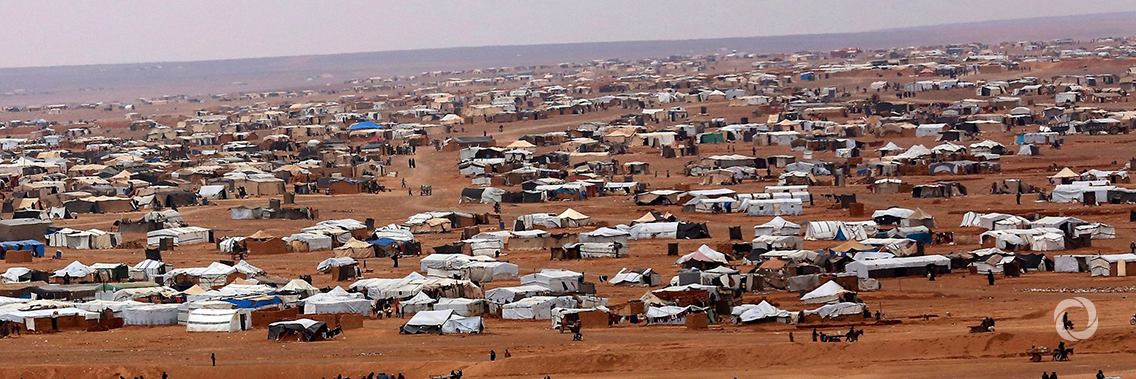
Over the past nine days UNHCR, the Refugee Agency, took part in one of the largest and most complex UN and Syrian Arab Red Crescent (SARC) humanitarian missions during eight years of the Syria crisis. The joint aid convoy delivered desperately-needed aid to more than 40,000 people stranded in the remote Rukban makeshift settlement in south-eastern Syria.
This was the second such convoy organized from within Syria – the first one was conducted in November 2018. Based on earlier assessments, this over a weeklong mission included more than 300 humanitarian staff and volunteers and well over 100 trucks loaded with aid.
The UN/SARC convoy brought food, medicines and medical equipment, winter equipment and clothing, shelter, plus hygiene kits for women and girls. Nutrition, education and children’s kits were also distributed. UNHCR together with other humanitarian partners closely monitored both the distribution and post-distribution phases to ensure the aid was delivered to those civilians most in need.
The conditions in Rukban are desperate. It’s a no man’s land, there are practically no services, access to clean water is very limited. Even the most basic healthcare does not exist and overall health conditions are catastrophic. Those most vulnerable are women, children and the disabled, who have no support and are left to fend for themselves. Prices of commodities that reach the camp are too expensive and beyond most families reach.
As part of the broader aid effort, the UNHCR team spent more than a week in Rukban and spoke with families, especially women, from various ages to understand the difficulties they face on a daily basis.
The majority of the civilian population at Rukban are women and children, living in makeshift and scattered shelter, without privacy nor protection from the harsh weather conditions.
To protect families and provide some relief, UNHCR and partners distributed thermal blankets, sleeping bags, plastic sheeting, winter clothing and solar lamps.
During the mission, our staff also carried out an intentions survey. Most people told our teams that they want to go back home. Some of these families have been at Rukban for more than four years. While the delivered aid provided some immediate relief, most people want a meaningful and sustainable solution to their plights. None of the children born in Rukban have any civil documentation; no birth certificates, not even a birth notification.
As part of the larger humanitarian effort in Syria, UNHCR adds its voice to the calls of the wider UN to all parties to facilitate delivery of aid to meet immediate critical needs. Sustained, predictable and safe access is essential to deliver life-saving supplies, monitor aid distributions and carry out needs assessments, as required by International Humanitarian Law.
The urgent need to find a durable solution for the civilian populations’ plight is evident, in order to ensure that these families have a chance to a better future.
Original source: UNHCR
Published on 15 February 2019