
Add us as your preferred source on Google to see more of our content in Search.
 Add to Preferred Sources
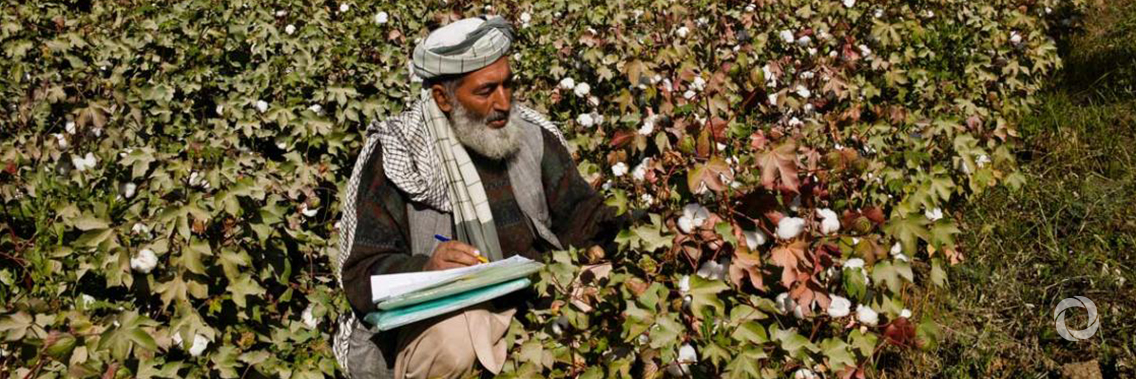
Afghanistan is experiencing one of the worst droughts in history. In Afghanistan, where farmers make up about 80 percent of the population, agricultural stability is national stability.
With the drought expected to be drawn out because of climate change and other factors, JICA is continuing its support of both hard infrastructure such as irrigation and soft infrastructure such as promoting rice growing and building the country’s capacity for policymaking, to build a foundation to allow agriculture to continue.
” Some farmers join antigovernment forces to feed their families often because of falling agricultural incomes due to droughts. No one would want to fight in a war if they could continue farming,” said JICA Senior Advisor Kenji Nagata.
An important key to reconstructing Afghanistan is to develop basic infrastructure for sustainable agriculture. From 2014 to 2017, Mr. Nagata served as water resources development and management adviser at Afghanistan’s Ministry of Energy and Water. Currently, he’s engaged in disseminating throughout Afghanistan the PMS irrigation method, which was applied in the irrigation projects that JICA and the international NGO Peace (Japan) Medical Services (PMS) have been carrying out together. PMS is active in the field of medicine and agriculture in Afghanistan.
JICA is implementing a project to improve rice-cultivation techniques in regions with relatively little drought damage. In Afghanistan, rice is the second most important staple crop next to wheat.
With the government’s limited capacity to help rice production farmers, JICA started a project of improving rice-based agriculture in Nangarhar Province in eastern Afghanistan in 2007. Based on the encouraging results of that project, JICA further extended its capacity building to improve rice productivity and quality for agricultural extension officers, researchers and farmers through the project “Rice-based Agriculture Development in Afghanistan,” which began in 2011 targeting eight provinces.
As a result, from 2014 to 2017, the average rice yields of some 2,500 demonstration farmers were 6.3 tons per hectare (paddy), almost double the amount produced by conventional techniques.
Original source: JICA
Published on 26 February 2019