
Add us as your preferred source on Google to see more of our content in Search.
 Add to Preferred Sources
Ahead of International Women’s Day on 8th March, themed “Think equal, build smart, innovate for change”, everyone should acknowledge the benefits that women bring to climate action so that climate change can be properly addressed.
Climate change impacts people differently – in terms of socioeconomic circumstances, disabilities, age, and gender. When solutions to climate change address these different realities, they are more effective and their impact ripples through society. Here are 5 reasons why climate action and women should be seen holistically.
1) 100 % of the population needs to be involved
51% of humanity is comprised of women and girls. To meet the most ambitious 1.5C target of the Paris Climate Change Agreement and to limit warming to well below 2C, it is critical that the needs, perspectives, and ideas of women, as well as of men, are included in climate action so as to create just, effective, and sustainable solutions.
Furthermore, indigenous women have experienced the impacts of climate change for generations and have been forerunners and leaders in environmental conservation. Their knowledge and expertise contribute greatly to building resilience to climate impacts and to cutting greenhouse gas emissions. The traditional skills and knowledge that women have relating to natural resource management in areas such as innovation, waste and energy are effective tools in climate action strategies.
2) Empowering women means more effective climate solutions
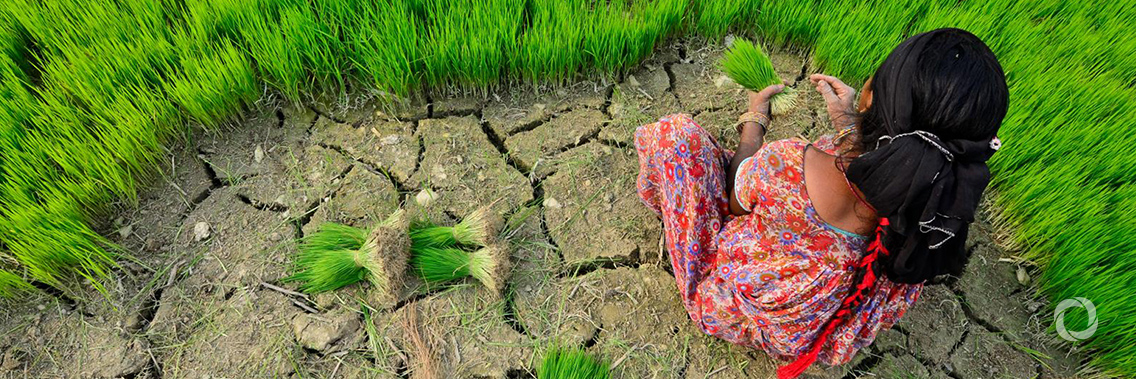
Women comprise approximately 43 percent of the agricultural labor force in developing countries. When provided with the same access to resources as men, women can increase their agricultural yields by 20 to 30 percent, not only stepping up total agricultural output in these countries by 2.5 to 4 percent but also contributing to world hunger reduction by 12 or 17 percent, according to the UN. This can positively impact climate adaptation in two ways – appropriate technology or resources contributes to more sustainable farming and conservation, and a reduction in poverty enables individuals to better adapt to changes in climate.
3) Women are vital to building climate resilience in communities
Communities do better in resilience and capacity building strategies when women are also involved in planning. According to the UN, women tend to share information about community wellbeing that is important for resilience and more willing to adapt to environmental changes since their family lives are impacted.
4) Climate change impacts everyone, but not equally
Targeted investments in gender equality and women’s empowerment yield returns in environmental conservation, poverty alleviation, social policy and achievement of the Sustainable Development Goals (SDGs). By tackling climate change with a gender lens, women’s rights are also addressed, tackling rather than exacerbating existing gender inequalities.
5) Countries have agreed! – work in progress under the UNFCCC
Countries have recognized the importance of involving women and men equally in UNFCCC processes and in the development and implementation of national climate policies that are gender-responsive by establishing a dedicated agenda item under the Convention addressing issues of gender and climate change. This includes the first-ever UNFCCC Gender Action Plan established under the Lima Work programme on gender (LWPG).
Original source: UNFCCC
Published on 04 March 2019