
Add us as your preferred source on Google to see more of our content in Search.
 Add to Preferred Sources
On his fourth visit to Syria as High Commissioner for Refugees, Filippo Grandi assessed the massive humanitarian needs facing the population here. After eight years of war, he observed that the magnitude of the humanitarian problem is staggering, exacerbated by the millions of people uprooted from their homes.
The years of violence and destruction forced virtually every second Syrian to flee their homes – more than 5.6 million Syrians live as refugees across the region and millions more Syrians are internally displaced. Estimates are that over 1.4 million internally displaced people (IDPs) returned to their homes in Syria in 2018. Some Syrians are also slowly returning from neighboring countries to areas where they feel safe.
Mr. Grandi reiterated UNHCR’s policy to help those displaced – in Syria and abroad. He also said that Syrians returning voluntarily home and settling back into their community need humanitarian support.
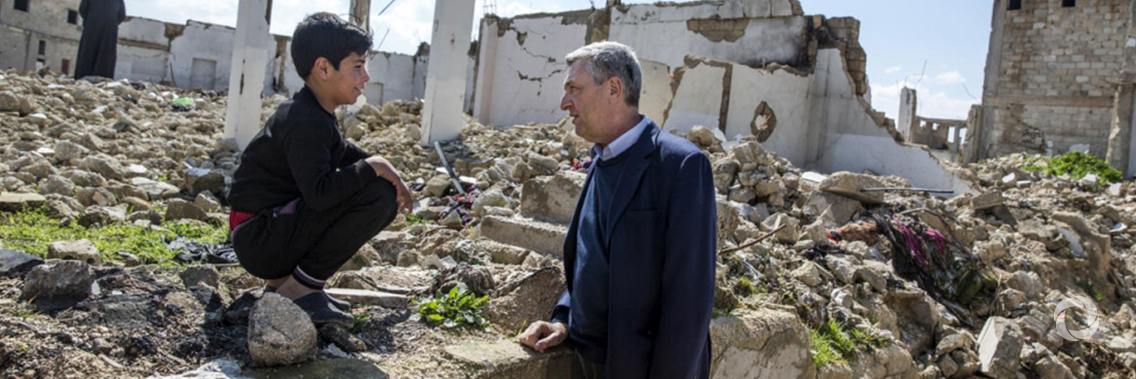
The High Commissioner met with returnees in the town of Souran, in Hama Governorate, where many internally displaced people and some refugees made the voluntary decision to return to their shattered homes. The returnees spoke to him about the challenges to resume life in their communities: damaged or destroyed buildings and infrastructure, lack of economic opportunities and inadequate services.
The High Commissioner also visited internally displaced families in Damascus living in harsh conditions in damaged and abandoned buildings. The homes they fled from were just several kilometers away, but they expressed reluctance to return citing worries about safety, even poorer infrastructure and the lack of means to repair the damage.
In his meetings with senior government officials, the High Commissioner emphasized that UNHCR’s access to people returning is critical in order to assess their needs and assist with their initial reintegration where support is needed. He noted that where we had this access, UNHCR with its UN and NGO partners was making efforts to rehabilitate homes, repair schools and reestablish health points and bakeries, as well as access to documentation. UNHCR’s work with returnees includes help to reclaim documents, responding to the needs of unaccompanied and separated children, as well as counseling and specific support to, particularly vulnerable individuals.
Original source: UNHCR
Published on 07 March 2019