
Add us as your preferred source on Google to see more of our content in Search.
 Add to Preferred Sources
On the eve of the foreign ministers’ meeting at the third Brussels Conference on Supporting the Future of Syria and the Region, three UN Principals warned that the Syria crisis is not yet over and called for sustained and large-scale support to vulnerable Syrians, refugees, and the communities hosting them.
As the crisis enters its ninth year, humanitarian needs inside Syria remain at record levels with 11.7 million people in need of some form of humanitarian aid and protection. Some 6.2 million people are internally displaced and more than 2 million boys and girls are out of school in Syria. An estimated 83 percent of Syrians live below the poverty line, and people are increasingly vulnerable due to the loss or lack of sustained livelihoods.
“Without an immediate and substantial injection of funds, life-saving provisions of food, water, health care, shelter and protection services will likely be interrupted,” said UN humanitarian chief Mark Lowcock. “It is vital that the international community remains by the side of every woman, man, girl and boy in Syria who need our help to meet the very basic requirements of a dignified life. If donors provide the funding, we can implement the plans to help achieve that.”
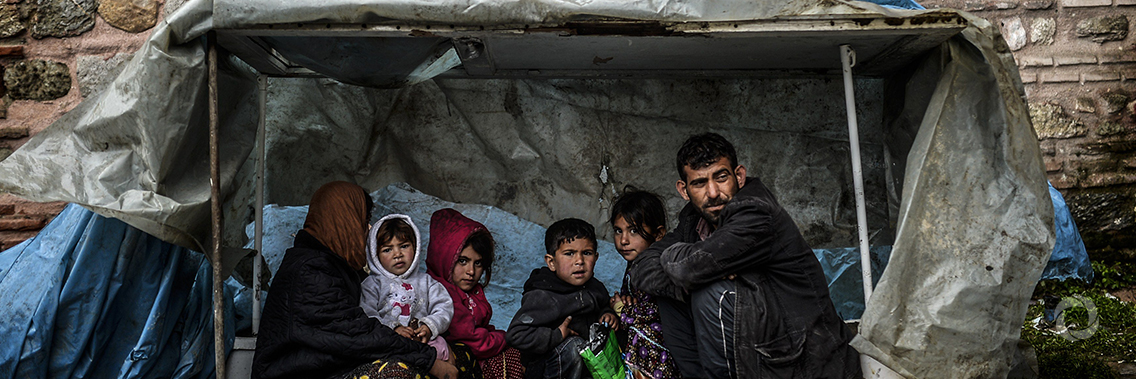
The situation is also driving the largest refugee crisis in the world. There are over 5.6 million Syrian refugees and up to 3.9 million impacted members of host communities in the neighboring countries.
The UN is therefore urgently seeking increased funding to help people in need through a US$3.3 billion appeal for the response inside Syria, and a $5.5 billion refugee and resilience plan for the neighboring countries.
“Eight years into the largest refugee crisis in decades, around 70 percent of Syrian refugees live a razor-edge existence below the poverty line,” said the UN High Commissioner for Refugees, Filippo Grandi. “Reduced assistance due to funding cuts means that refugees are forced to make agonizing choices every day, such as taking children out of school to work or reducing meals. They are also vulnerable to exploitation and abuse.”
“It is essential that the international community stays the course in supporting the millions of Syrian refugees who live in neighboring countries and still require protection and assistance. No less support needs to be extended to the local host communities and governments who have been sheltering millions of Syrian refugees for the past eight years,” said Grandi. “Help is also needed for those refugees – and the much larger number of internally displaced people – who are choosing to return home, in very difficult circumstances.”
Host countries and their communities need predictable financing to continue the support for refugees, ensure national services are available, and to expand opportunities for both refugees and citizens. They have generously hosted refugees, offering asylum and protection, opening public services, enabling more and more refugees to participate in the local economy and building the resilience of refugees and hosts alike.
Despite generous funding by donors in 2018, only 65 percent of the $3.4 billion required for the inside-Syria plan last year was received. The regional refugee and resilience plan requesting $5.6 billion for 2018 was 62 percent funded.
Original source: UNHCR
Published on 13 March 2019