
Add us as your preferred source on Google to see more of our content in Search.
 Add to Preferred Sources
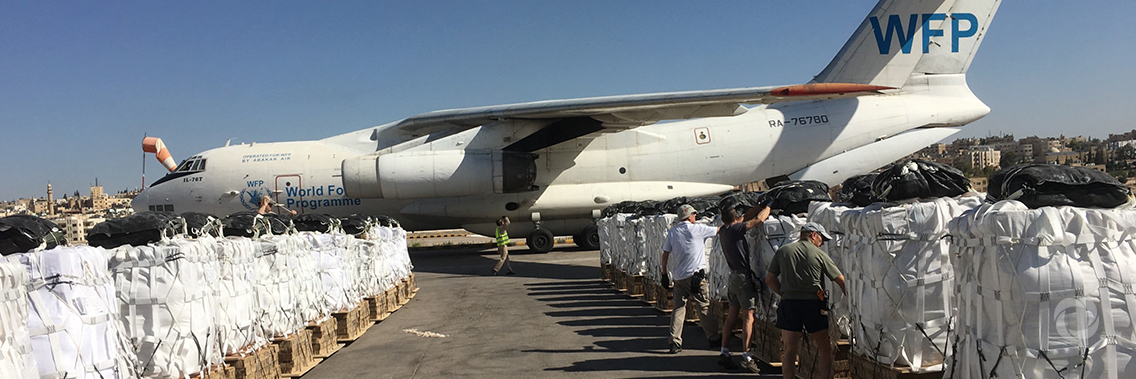
In Syria, more than three million people affected by the conflict receive assistance from the World Food Programme. Every month, WFP uses over 4,600 trucks to deliver emergency food assistance to more than 1,300 distribution points in all of Syria’s 14 governorates.
Through regular monthly food deliveries, WFP provides a family of five with a box of food containing staple food items such as bulgur wheat, lentils, rice, wheat flour, canned food, salt, sugar and cooking oil. For families not reachable from inside Syria, WFP runs a cross-border operation from Turkey to deliver lifesaving food and other humanitarian items on behalf of other agencies.
At the heart of this colossal operation are UN Volunteers like Bashar Shehadeh who helps make things happen. The thirty-nine-year-old Syrian National from Damascus works around the clock to ensure food shipments are handled promptly and with care.
Checking shipping documents, liaising with suppliers, authorities and custom agents along the Lebanese and Syrian borders, Shehadeh knows speed is of the essence – getting the food cargo into Syria quickly so that it reaches people in need.
“Delay is not an option. We move quickly to keep the supply chain cycle rolling to catch the food distributions on time. Millions of Syrians depend on WFP food assistance and we work to deliver in a predictable and regular manner,” said Bashar Shehadeh, UNV Logistics Officer with the World Food Program, Lebanon.
Shipping food into Syria is vital to the continuation of WFP’s food assistance programmes in the country. Besides distributing food assistance to three million people across the country, WFP runs a school meals programme that reaches 660,000 school-aged children.
WFP also runs a nutrition programme distributing nutritional supplements to prevent and treat malnutrition in children under the age of two. Around 30,000 women receive fresh food voucher in addition to their food rations to improve their diets.
Original source: UN Volunteers
Published on 15 March 2019